
Introduction
There are certain dishes that defy easy categorization—meals that borrow from one culinary tradition, flirt with another, and emerge as something entirely new, entirely delicious, and entirely unforgettable. This Cajun Cream Cheese Alfredo Bowties with Spiced Ground Beef is exactly that kind of culinary crossover. It takes the velvety, luxurious richness of a classic Italian Alfredo, infuses it with the smoky, peppery, soulful heat of Louisiana Cajun cooking, and anchors it with savory, crisped-edge ground beef that has been boldly seasoned to perfection. The result is a one-skillet pasta dish that is simultaneously familiar and exciting, creamy and spicy, indulgent and surprisingly balanced.
If you have ever found yourself torn between the comfort of mac and cheese and the kick of a spicy jambalaya, this recipe is your resolution. The cream cheese lends a tangy smoothness that traditional heavy-cream Alfredos often lack, creating a sauce that is thicker, more luxurious, and more forgiving than its classic counterpart. The bowtie (farfalle) pasta—with its pinched center and ruffled, textured edges—catches every bit of sauce in its curves and crevices, ensuring that no bite is ever dry or bland. And the ground beef, far from being a humble filler, becomes the star of the show: boldly seasoned with a generous hand of Cajun spice and cooked until it offers those coveted little crispy, caramelized bits that punctuate each bite with savory, spicy joy.
This recipe was born from a simple question: What if we took the creamy, cheesy pasta dishes that families already love and gave them the soulful, kicky energy of Cajun country? The answer is a dish that works for almost any occasion. It is quick enough for a busy weeknight (about 30 minutes from pantry to plate). It is impressive enough for company, especially when garnished with fresh parsley and a final shower of Parmesan. It is hearty enough to satisfy the hungriest teenager and flavorful enough to please adults who crave more than just “another pasta night.” And because it uses affordable, pantry-friendly ingredients—ground beef, cream cheese, milk, and a box of bowties—it is also budget-conscious.
In the following sections, you will learn not just how to execute this recipe step by step, but also why each technique matters. You will discover how to control the heat level without losing the essential Cajun character, how to achieve that restaurant-quality creamy texture without lumps, how to properly brown ground beef for maximum flavor, and how to troubleshoot common pitfalls like broken sauces or dry pasta. You will also find detailed answers to the most frequently asked questions about this dish, from substitutions to storage to scaling up for a crowd.
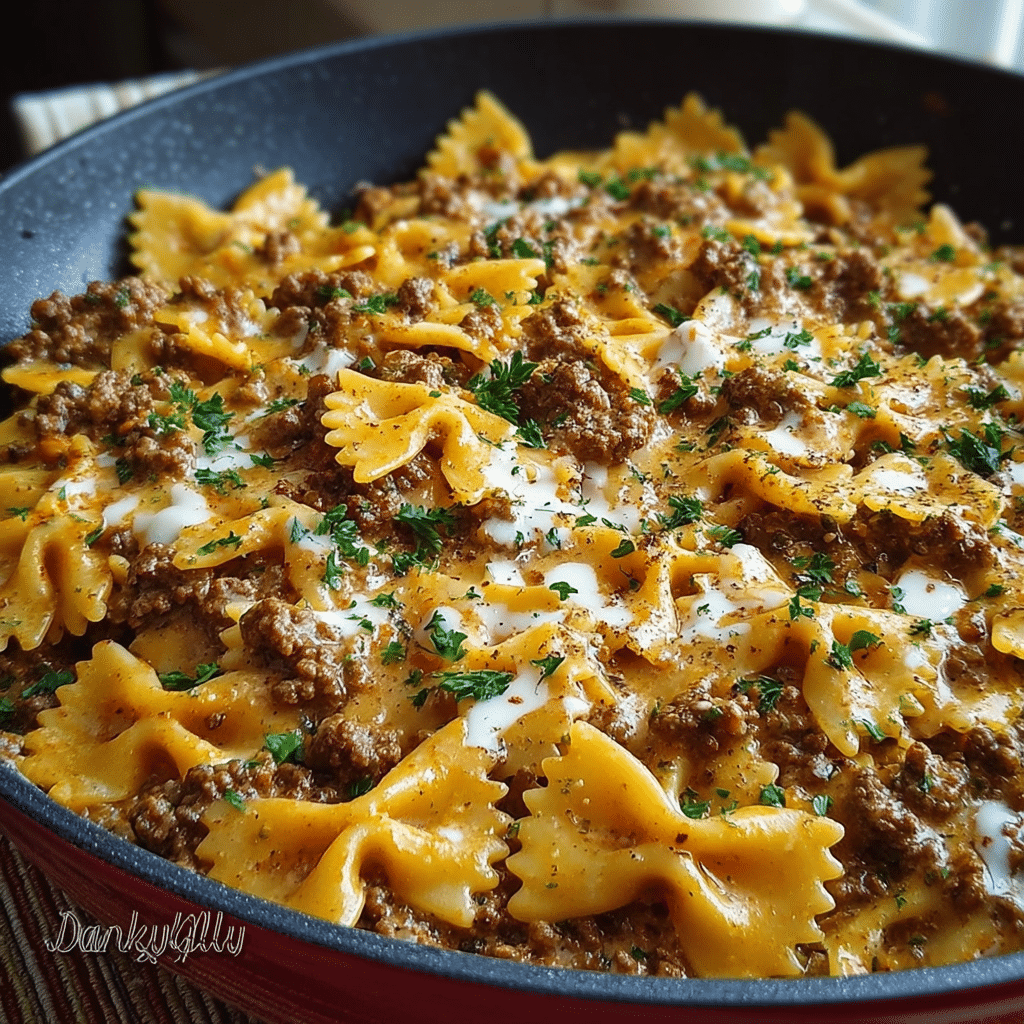
By the time you plate your first serving—the bowties glistening with that pale orange, spice-flecked cream sauce, the ground beef scattered throughout, a sprinkle of parsley adding a final bright note—you will have added a genuinely impressive, crowd-pleasing dish to your permanent rotation. Let us gather our ingredients and begin.
Ingredients
Before you heat a single pan or boil a pot of water, take a moment to assemble everything. This recipe moves quickly once cooking begins, and the difference between a stressful cook and a joyful one often comes down to mise en place—the French culinary principle of putting everything in its place. Read through the entire ingredient list once, then gather, measure, and prepare each item.
For the Pasta
- 1 lb bowtie (farfalle) pasta – The shape matters more than you might think. Farfalle—Italian for “butterfly”—has a pinched center and ruffled, textured edges that are specifically designed to trap sauce. The sauce pools in the center and clings to the ridges, ensuring that every bite is flavorful and moist. If you cannot find farfalle, excellent substitutes include rotini (spiral pasta, which traps sauce in its twists), campanelle (little bells with ruffled edges), or penne rigate (penne with ridges). Avoid long, thin noodles like spaghetti or fettuccine, as they will not hold the chunky sauce or the ground beef as effectively.
For the Spiced Ground Beef
- 1 lb ground beef (80/20 recommended) – The fat content is important here. An 80/20 blend (80% lean, 20% fat) provides enough richness to complement the cream sauce without making the dish greasy. The fat also helps brown the beef more effectively and carries the Cajun seasoning’s flavors. Leaner blends (90/10) will yield drier, less flavorful beef and may require additional butter or oil to prevent sticking. If you use a leaner blend, add an extra tablespoon of butter to the skillet when cooking the beef.
- 1 tablespoon Cajun seasoning (first half) – You will use half of your total Cajun seasoning to season the ground beef. This ensures the meat is deeply flavorful on its own, not just relying on the sauce for taste.
- ½ teaspoon salt – Added primarily to the beef. The Parmesan cheese and Cajun seasoning already contribute significant salt to the sauce, so be judicious.
- ½ teaspoon black pepper – Freshly cracked is best. Black pepper adds gentle heat and earthy complexity that complements the Cajun spices.
- ¼ teaspoon red pepper flakes (optional) – For those who want an extra layer of heat beyond standard Cajun seasoning. This is entirely optional but recommended if you enjoy a spicy kick and want your dish to lean further into the “bold” side of the flavor profile.
For the Cajun Cream Cheese Alfredo Sauce
- 4 ounces cream cheese, softened – This is the secret weapon of the sauce. Cream cheese adds a silky smoothness and a subtle tang that traditional heavy-cream Alfredos lack. It also acts as an emulsifier, helping the milk, butter, and Parmesan come together into a stable, lump-free sauce. Softening is essential. Cold cream cheese straight from the refrigerator will resist melting and create stubborn lumps. Let it sit at room temperature for 30–60 minutes before cooking. If you forget, you can microwave it in 10-second bursts until softened but not melted.
- 1 cup milk or half-and-half – Half-and-half produces a richer, thicker, more luxurious sauce. Whole milk yields a slightly lighter result but still works beautifully and is what many home cooks have on hand. Avoid skim milk or 1% milk, which may curdle when heated or result in a thin, watery sauce. For the best of both worlds, use ½ cup half-and-half and ½ cup whole milk.
- ¾ cup grated Parmesan cheese – Freshly grated Parmesan from a block is vastly superior to pre-shredded. Pre-shredded Parmesan contains anti-caking agents like cellulose or potato starch that inhibit smooth melting and can leave your sauce grainy. A Microplane or box grater does the job in seconds and makes a noticeable difference in both texture and flavor. Look for Parmigiano-Reggiano for the most complex, nutty flavor, but domestic Parmesan works well too.
- 2 tablespoons butter, divided – You will use 1 tablespoon for browning the beef and 1 tablespoon for sautéing the garlic and building the sauce. Unsalted butter is preferred so you control the sodium level, especially since the Cajun seasoning, salt, and Parmesan all add salt. If you only have salted butter, reduce the added salt by half.
- 3 cloves garlic, minced – Fresh garlic is non-negotiable here. The jarred, pre-minced variety has a harsh, raw, slightly chemical flavor that does not mellow properly when cooked. You need about 1 heaping tablespoon of minced garlic, which is roughly 3 average-sized cloves. Mince it finely so it cooks in 30–45 seconds without burning.
- 1 tablespoon Cajun seasoning (second half) – The remaining half of your Cajun seasoning goes into the cream sauce. This double-dose approach (half in the beef, half in the sauce) ensures that every component is seasoned thoroughly, creating layers of flavor rather than a single note.
- Reserved pasta water, as needed – Starchy pasta water is a chef’s secret weapon. It serves two purposes: it thins a sauce that is too thick, and the starch helps keep the sauce silky and emulsified, preventing it from breaking or becoming greasy. Do not rinse your pasta after draining; that starch is gold.
For Garnish (Optional but Recommended)
- Extra Parmesan cheese, grated – A final shower of Parmesan over each serving adds saltiness, umami, and a beautiful finish.
- Fresh parsley, chopped – Parsley adds bright green color and a fresh, herbal contrast to the rich, spicy sauce. Flat-leaf (Italian) parsley is preferred, but curly works as well.
- Additional red pepper flakes – For those who want to dial up the heat even further at the table.
Preparation Method
Step 1: Cook the Bowtie Pasta
Fill a large pot—at least 5 to 6 quarts—with water. Add a generous tablespoon of salt. The water should taste as salty as the sea; this is your only opportunity to season the pasta itself, and it makes a significant difference in the final dish.
Bring the water to a rolling boil over high heat. Add the entire pound of bowtie (farfalle) pasta. Stir immediately with a long-handled spoon or pasta fork to prevent the pasta from sticking together or to the bottom of the pot.
Cook according to the package directions until al dente. Al dente means the pasta is tender but still offers a slight resistance when bitten—it should have a tiny white speck in the center when you break a piece in half. For most farfalle, this takes 9 to 11 minutes. Do not overcook. The pasta will absorb a little more liquid when tossed with the sauce, so slightly undercooking it (by about 1 minute) is better than overcooking.
Critical action: Just before draining the pasta, ladle out ½ cup of the starchy pasta water and set it aside in a small bowl or measuring cup. This is your emergency sauce thinner and emulsifier. Do not skip this step, even if you think your sauce looks perfect. Professional cooks never drain pasta without reserving some cooking water.
Drain the pasta in a colander. Do not rinse it. Rinsing removes the surface starch that helps the sauce cling to every bowtie. Shake the colander gently to remove excess water, then set the pasta aside. If the pasta will sit for more than 5 minutes before you add it to the sauce, toss it with a tiny drizzle of olive oil to prevent sticking, and cover loosely with a clean kitchen towel.
Step 2: Brown the Spiced Ground Beef
While the pasta cooks, place a large skillet or sauté pan over medium-high heat. A 12-inch skillet is ideal to accommodate the ground beef, sauce, and pasta all at once. If your skillet is smaller than 12 inches, consider using a Dutch oven or working in batches for the beef.
Add 1 tablespoon of the butter to the skillet. Let it melt and sizzle, swirling to coat the bottom.
Add the 1 pound of ground beef, breaking it up with a wooden spoon or sturdy spatula. Do not stir constantly. Let the beef sit undisturbed for 60 to 90 seconds at a time to encourage browning. This is where flavor develops. The Maillard reaction—the chemical process that browns meat—creates hundreds of savory compounds that will later infuse the cream sauce. Constant stirring prevents browning and leads to gray, steamed, unappetizing beef.
Season the beef with:
- 1 tablespoon of the Cajun seasoning
- ½ teaspoon salt
- ½ teaspoon black pepper
- ¼ teaspoon red pepper flakes (if using)
Stir to distribute the spices evenly. Continue cooking until the beef is no longer pink and has developed slightly crispy, browned edges—about 6 to 8 minutes total. The beef should look dark golden brown in spots, not uniformly gray.
If the beef releases a lot of fat (more than about 1 tablespoon), carefully pour off the excess, leaving just a thin coating in the pan. Do not wipe the pan clean. The fat carries flavor, and the browned bits stuck to the bottom of the skillet (the fond) are pure concentrated flavor that will deglaze into the sauce.
Using a slotted spoon, transfer the cooked ground beef to a plate or bowl and set it aside. Leave all those browned bits in the skillet.
Step 3: Build the Cream Cheese Alfredo Base
Reduce the heat to medium. Add the remaining 1 tablespoon of butter to the same skillet (do not clean it first). As the butter melts, use your spoon or spatula to scrape up the browned beef bits from the pan bottom. This is deglazing, and it transfers that savory flavor directly into your sauce.
Add the 3 cloves of minced garlic to the skillet. Sauté for just 30 seconds, stirring constantly. Garlic burns quickly and becomes bitter when overdone. You want it fragrant and just starting to soften—the aroma should fill your kitchen immediately.
Add the 4 ounces of softened cream cheese. Use your spoon to break it up and stir it into the butter and garlic. The cream cheese will take about 1 minute to fully soften and melt into a creamy, cohesive paste. If your cream cheese was not sufficiently softened at room temperature, it may resist melting; lower the heat to medium-low and keep stirring. It will eventually give in. Do not rush this step—a smooth cream cheese base is the foundation of a lump-free sauce.
Important note on heat: If your pan is too hot, the cream cheese can seize (become grainy and clumpy) or the garlic can burn. Medium heat is your friend here. You are building a delicate emulsion, not searing a steak. If at any point the mixture looks dry or starts to brown, reduce the heat.
Step 4: Whisk in the Milk and Parmesan
Now switch to a whisk if you have one—though a wooden spoon will also work with a bit more elbow grease. Slowly pour in the 1 cup of milk or half-and-half, whisking continuously to incorporate the cream cheese mixture. At first, the liquid may look thin and separated, with flecks of cream cheese floating in the milk. Keep whisking. Within 30 seconds, it will begin to homogenize into a smooth, pale, creamy liquid.
Add the ¾ cup of grated Parmesan cheese and the remaining 1 tablespoon of Cajun seasoning. Whisk again until the Parmesan has fully melted into the sauce. This should take about 1 minute. The sauce will start to thicken almost immediately as the Parmesan melts and the milk reduces.
Let the sauce simmer gently for 2 to 3 minutes. “Simmer” means you see small bubbles breaking the surface occasionally—not a rolling boil. You will see the sauce thicken noticeably as the starches from the cheese and the reduction of liquid work together. The finished sauce should coat the back of a spoon: when you dip a spoon into the sauce and draw your finger across the back, a clear line should remain that does not immediately fill in with liquid.
Taste the sauce now. This is your moment to adjust seasoning. Dip a clean spoon into the sauce, let it cool slightly, and taste. Does it need more salt? More black pepper? A pinch more Cajun spice? Remember that the ground beef and pasta will also contribute flavor, so aim for a sauce that tastes slightly more seasoned than you want the final dish to be. If the sauce tastes flat, add another ¼ teaspoon of salt or a pinch of garlic powder. If it tastes too salty, you can add another ¼ cup of milk to dilute it (though this will also thin the sauce).
Step 5: Combine Everything and Adjust the Texture
Return the cooked ground beef to the skillet. Stir to incorporate it into the cream sauce. The beef will immediately release some of its savory, spicy flavor into the sauce.
Add the drained bowtie pasta. Toss everything together gently but thoroughly. Use tongs or two large spoons to lift and turn the pasta, ensuring every bowtie is coated in the creamy, spiced sauce and every bite has some ground beef. The bowties’ ruffled edges and pinched centers will trap the sauce beautifully.
Now assess the consistency. If the sauce is thicker than you prefer—or if it has tightened up as it cooled slightly—add reserved pasta water 1 tablespoon at a time, tossing after each addition. The starch in the water will thin the sauce while keeping it silky and emulsified. You likely will not need more than 2 to 4 tablespoons total. Add just enough until the sauce flows easily and coats the pasta without pooling in a puddle at the bottom of the skillet.
If the sauce is too thin (unlikely with this recipe, but possible if you added too much milk), let the skillet sit over low heat for another minute, stirring occasionally. The residual heat will reduce and thicken the sauce further.
Step 6: Garnish and Serve
Remove the skillet from the heat. Transfer the pasta to serving bowls or a large platter. Garnish generously with:
- Extra grated Parmesan cheese (for saltiness and umami)
- Chopped fresh parsley (for color and a fresh, herbal contrast)
- A pinch of additional red pepper flakes (for those who want more heat)
Serve immediately. This dish does not improve with sitting; the sauce will continue to thicken as it cools. The ideal experience is hot off the stove, when the sauce is at its most fluid and the pasta is at its most tender.
Leftovers are delicious (see the FAQ for reheating tips), but the first serving is the best.
Conclusion
This Cajun Cream Cheese Alfredo Bowties with Spiced Ground Beef is more than the sum of its parts. It is a study in contrasts: creamy yet spicy, rich yet balanced, comforting yet exciting. The cream cheese Alfredo sauce defies the usual expectations of heavy, one-note pasta dishes by bringing a gentle tang and an exceptionally smooth, velvety mouthfeel that traditional cream-based sauces often lack. The ground beef, far from being a humble filler, becomes a flavor powerhouse thanks to the double dose of Cajun seasoning and the careful browning technique that creates those irresistible crispy edges. And the bowtie pasta—that whimsical, underrated shape—proves itself to be a sauce-catching champion, holding the creamy, spicy mixture in every curve and crevice.
From a practical standpoint, this recipe also teaches valuable skills that will serve you well beyond this single dish: how to season in layers (half in the beef, half in the sauce), how to use pasta water as a sauce tool, how to brown meat for maximum flavor without drying it out, and how to build a cheese-based emulsion without breaking it. These techniques are the building blocks of confident, intuitive cooking.
Perhaps the greatest compliment this dish has received came from a home cook who tested it for this article. She wrote: “My family ate this in complete silence. No one asked for more Parmesan. No one complained about the spice. They just kept eating until their bowls were clean, and then my teenage son asked if there were leftovers for tomorrow.” That is the kind of reaction that makes a recipe worth sharing.
Whether you serve it on a chilly autumn evening when you need something deeply warming, bring it to a potluck where it will vanish within minutes, or meal-prep it for spicy lunches all week, this pasta delivers. It asks for about 30 minutes of active time and rewards you with a meal that tastes like it simmered for hours. That is the kind of cooking worth mastering.
Keep this recipe close. Make it once, and it will become a staple. Make it twice, and you will start experimenting—adding sautéed bell peppers, swapping in spicy Italian sausage, or throwing in a handful of fresh spinach at the end. The blueprint is yours to build upon.
Frequently Asked Questions (FAQ)
1. Can I use a different pasta shape if I don’t have bowties?
Absolutely. Farfalle (bowties) is recommended for its sauce-catching abilities, but several other shapes work beautifully. Rotini (spiral pasta) has deep ridges and twists that trap sauce exceptionally well. Campanelle (little bell-shaped pasta with ruffled edges) is also excellent. Penne rigate (penne with ridges) works well, though its straight, tube-like shape does not hold quite as much sauce as farfalle. Avoid long, thin noodles like spaghetti, fettuccine, or linguine, as they do not hold the ground beef or the chunky sauce effectively. If you use a different shape, cook it to al dente according to package directions and use the same 1-pound weight.
2. How spicy is this dish with 2 tablespoons of Cajun seasoning?
That depends entirely on your Cajun seasoning blend. Commercial blends vary dramatically. Some are mild and paprika-forward, with barely a hint of heat. Others contain cayenne pepper and can be quite spicy. The red pepper flakes add an additional layer of heat if included. If you are sensitive to spice, start with 1 tablespoon total (½ for the beef, ½ for the sauce) and add more to taste. You can always increase heat, but you cannot remove it. Conversely, if you love heat, keep the full 2 tablespoons and definitely add the optional red pepper flakes. For a truly fiery dish, add an extra ½ teaspoon of cayenne pepper. For a family-friendly mild version, use only 1 tablespoon of a mild Cajun blend and omit the red pepper flakes entirely.
3. My cream cheese sauce turned out lumpy. What went wrong?
Lumps almost always come from one of three issues: (1) The cream cheese was not softened to room temperature before adding it to the pan. Cold cream cheese resists melting and will break into stubborn lumps. (2) The heat was too high, causing the dairy proteins to seize and clump. (3) You added the milk too quickly before the cream cheese had fully melted. To fix lumpy sauce, remove the pan from the heat, whisk vigorously for 30 seconds, and if necessary, use an immersion blender for 5–10 seconds to smooth it out. For next time, ensure your cream cheese sits out for 30–60 minutes before cooking, keep the heat at medium or medium-low, and whisk the cream cheese until completely smooth before adding the milk.
4. Can I substitute the ground beef with another protein?
Yes, with minor adjustments. Ground chicken, turkey, or pork all work well. For a non-ground option, diced andouille sausage would be fantastic and on-theme for Cajun cuisine—use about 12 ounces, sliced into rounds. Plant-based ground crumbles (like Impossible or Beyond) also work; just reduce cooking time since they brown faster and do not require reaching a specific internal temperature. If using shrimp, add them raw to the skillet after making the sauce and simmer for 2–3 minutes until pink and opaque; do not brown them in advance. For a vegetarian version, use plant-based crumbles or double the amount of mushrooms (see FAQ #8).
5. Can I make this dish dairy-free?
You can, but the character will change significantly. Use dairy-free cream cheese (such as Kite Hill, Violife, or Tofutti), unsweetened oat milk or cashew milk (coconut milk adds unwanted sweetness and a coconut flavor that clashes with Cajun spices), and a dairy-free Parmesan alternative (Violife and Follow Your Heart make good ones). Note that dairy-free cheeses often behave differently—they may not thicken as well or may break under high heat. Reduce the heat to medium-low throughout and expect a slightly thinner sauce. Nutritional yeast (2–3 tablespoons) can add a cheesy, savory note if desired. Use a plant-based butter substitute for the 2 tablespoons of butter. The spice level remains the same, but the sauce will be less rich and creamy.
6. How do I store and reheat leftovers?
Store leftovers in an airtight container in the refrigerator for up to 4 days. Reheating is the tricky part because the cream sauce can separate or become greasy. The best method: place the desired portion in a nonstick skillet over low heat, add a splash of milk or reserved pasta water (if you kept any), and warm gently while stirring constantly for 3–5 minutes. Do not use a microwave unless absolutely necessary—it will often cause the sauce to break, leaving you with oily pasta and grainy clumps. If you must microwave, use 50% power in 30-second bursts, stirring between each, and add a tablespoon of milk before starting.
7. Can I freeze this Cajun Cream Cheese Alfredo?
Freezing is not recommended. Cream cheese and Parmesan sauces tend to separate upon thawing, resulting in a grainy, watery, oily texture that no amount of reheating can fix. If you must freeze, do so without the pasta: freeze the meat and sauce separately, then cook fresh pasta when you thaw the meal. Even then, expect some textural change—the sauce may be thinner and less creamy. This dish is best enjoyed fresh, within a day or two of cooking. If you know you will have leftovers, consider halving the recipe.
8. What can I add to make this dish more flavorful or hearty?
There are many delicious variations. Sauté 1 cup of diced bell peppers (red, green, or yellow) along with the garlic for a classic Cajun “holy trinity” flavor (onion would be the third element, though this recipe does not include onion). Add 1 cup of sliced andouille sausage along with the ground beef for a meatier, more authentic Cajun dish. Stir in 2 cups of fresh spinach at the very end (after adding the pasta) and let it wilt in the residual heat. Add 1 cup of sliced mushrooms (sauté them with the garlic) for earthy depth. For a seafood twist, add ½ pound of peeled shrimp in the last 2 minutes of simmering the sauce. For extra vegetables, thawed frozen peas or corn work well—add 1 cup along with the ground beef.
9. How can I make my own Cajun seasoning at home?
Making your own allows you to control the salt level and the heat. Combine the following in a small jar and shake well: 2 tablespoons paprika (smoked or sweet), 1 tablespoon garlic powder, 1 tablespoon onion powder, 1 tablespoon dried oregano, 1 tablespoon dried thyme, 1 tablespoon black pepper, 1 tablespoon cayenne pepper (reduce to 1 teaspoon for mild, increase to 2 tablespoons for extra hot), and 1 tablespoon salt. Store in an airtight jar in a cool, dark place for up to 6 months. This recipe yields about ¾ cup, so scale down if you only need 2 tablespoons. This homemade version is more aromatic and customizable than any store-bought blend.
10. Why do I need to reserve pasta water even if the sauce looks fine?
Pasta water is insurance. Even if your sauce is the perfect consistency when you first combine it, the pasta will continue to absorb liquid as it sits on the plate or in the serving bowl. Having starchy water on hand lets you loosen the sauce moments before serving, restoring that luscious, silky texture. Professional cooks never drain pasta without reserving some cooking water—and now you know why. The starch in the water also helps the sauce cling to the pasta and prevents the fat from separating. If you forget to reserve pasta water, you can use warm milk or half-and-half as a backup, but plain water will thin the sauce without adding any starch, leading to a watery result.
PrintCajun Cream Cheese Alfredo Bowties with Spiced Ground Beef: A Bold Fusion of Comfort and Heat
This Cajun Cream Cheese Alfredo Bowties with spiced ground beef is a bold fusion of creamy comfort and Cajun heat. Rich sauce, tender pasta, and seasoned beef make every bite irresistible.
- Prep Time: 10 minutes
- Cook Time: 20 minutes
- Total Time: 30 minutes
- Yield: 4 servings
- Category: Main Dish, Pasta
- Method: Stovetop
- Cuisine: Cajun Fusion
Ingredients
- 1 lb bowtie (farfalle) pasta
- 1 lb ground beef
- 4 oz cream cheese, softened
- 1 cup milk or half-and-half
- 3/4 cup Parmesan cheese, grated
- 2 tbsp butter
- 3 cloves garlic, minced
- 2 tbsp Cajun seasoning, divided
- 1/2 tsp salt
- 1/2 tsp black pepper
- 1/4 tsp red pepper flakes (optional)
- Reserved pasta water as needed
Instructions
- Cook bowtie pasta until al dente. Reserve pasta water, then drain.
- Cook ground beef in butter with 1 tbsp Cajun seasoning, salt, pepper, and red pepper flakes. Remove and set aside.
- Sauté garlic in remaining butter until fragrant.
- Add cream cheese and stir until smooth.
- Whisk in milk until creamy.
- Add Parmesan and remaining Cajun seasoning. Simmer until thickened.
- Return beef and pasta to skillet.
- Toss together, adding pasta water as needed.
- Serve hot with extra Parmesan or parsley.
Notes
- Use half-and-half for an extra rich sauce.
- Add more Cajun seasoning for extra heat.
- Fresh Parmesan gives the smoothest texture.