
Introduction
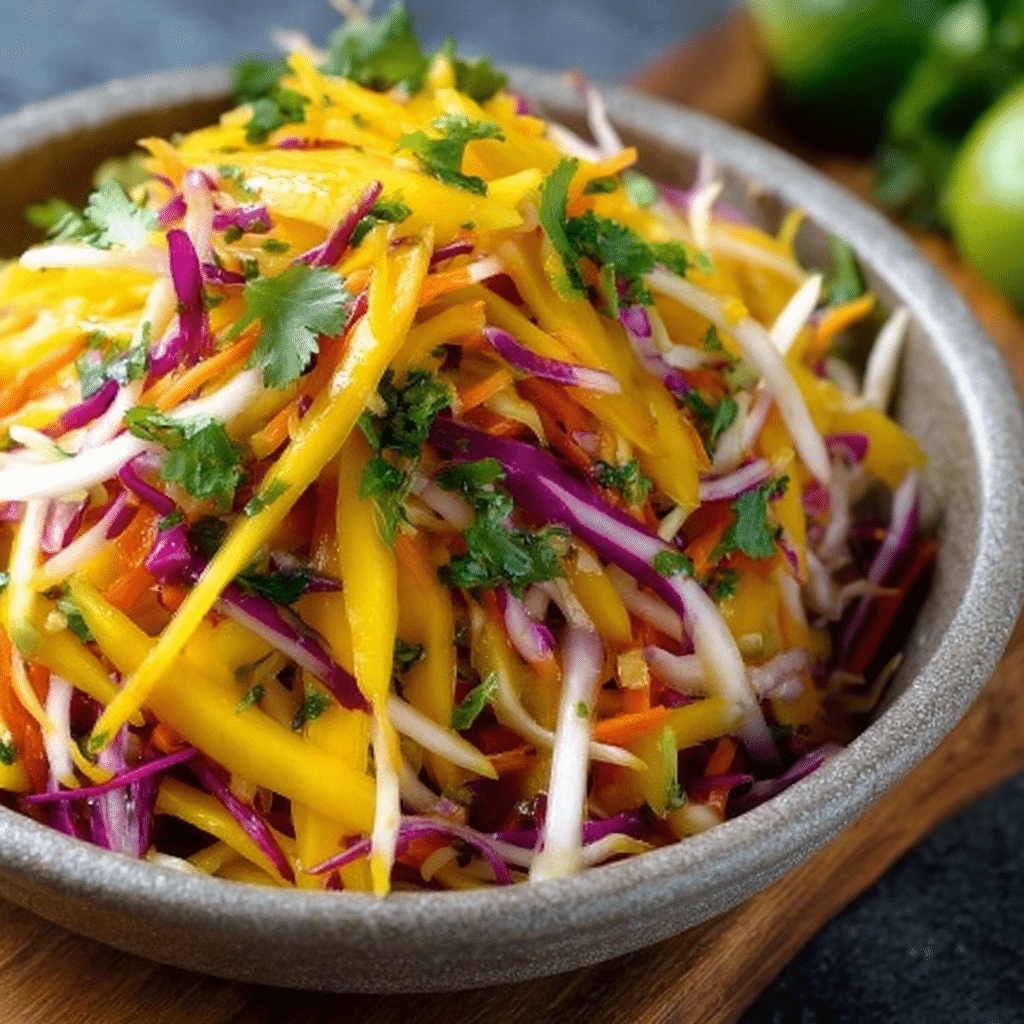
Mango Slaw is a bright, refreshing, and naturally sweet side dish that combines crisp vegetables with juicy tropical fruit and a light, tangy dressing. It is the kind of recipe that instantly elevates any meal, whether served alongside grilled meats, seafood, sandwiches, or vegetarian dishes. The balance of flavors is what makes it stand out: the sweetness of ripe mangoes, the crunch of fresh cabbage and carrots, the slight sharpness of red onion, and the herbal freshness of cilantro all come together in perfect harmony.
Unlike heavy creamy slaws, this version is light and vibrant. The dressing is made with lime juice, honey or maple syrup, and sesame oil, which creates a smooth combination of citrusy brightness, gentle sweetness, and subtle nuttiness. This makes Mango Slaw not only delicious but also refreshing and easy to enjoy in warm weather.
This recipe is also highly versatile. It can be served immediately for maximum crunch or left to sit for a few minutes so the flavors blend together more deeply. It can also be customized with extras like avocado, nuts, or chili flakes for added texture and heat.
In this detailed guide, you will learn how to prepare Mango Slaw step by step, understand the role of each ingredient, explore variations, discover serving ideas, and get answers to the most frequently asked questions.
Ingredients
This recipe uses fresh, simple ingredients that create a perfect balance of sweet, tangy, and crunchy elements.
- 2 ripe mangoes, peeled and diced
- 2 cups green cabbage, finely shredded
- 1 large carrot, grated
- 1 red bell pepper, thinly sliced
- ¼ cup red onion, thinly sliced
- ¼ cup fresh cilantro, chopped
- 3 tablespoons lime juice
- 2 tablespoons honey or maple syrup
- 1 tablespoon sesame oil
- Salt and pepper, to taste
Each ingredient contributes something important. Mangoes bring natural sweetness and juiciness. Cabbage provides crunch and structure. Carrots add color and mild sweetness. Red bell pepper enhances freshness and crisp texture. Red onion gives a slight sharp bite, while cilantro adds herbal brightness. The dressing ties everything together with acidity, sweetness, and depth.
Preparation Method
Step 1: Preparing the Fresh Ingredients
Start by preparing all your produce. Peel and dice the ripe mangoes into bite-sized cubes. Choose mangoes that are slightly soft to the touch for the best sweetness and texture.
Finely shred the green cabbage to ensure it mixes evenly with the other ingredients and provides a consistent crunch in every bite. Grate the carrot using a box grater or food processor for a fine, delicate texture that blends well with the slaw.
Next, thinly slice the red bell pepper and red onion. The thinner the slices, the better they will distribute throughout the salad without overpowering it.
Finally, chop the fresh cilantro. This herb adds a refreshing aroma and a slight citrus-like note that enhances the overall flavor profile.
Place all prepared ingredients into a large mixing bowl.
Step 2: Mixing the Slaw Base
Once all the vegetables and mango are in the bowl, gently toss them together. The goal is to distribute the ingredients evenly without crushing the mango pieces.
At this stage, the slaw already looks colorful and vibrant. The combination of yellow mango, green cabbage, orange carrot, red pepper, and purple onion creates a visually appealing dish that feels fresh and inviting.
Mixing carefully ensures that every spoonful later will contain a balanced combination of textures and flavors.
Step 3: Preparing the Dressing
In a separate small bowl, prepare the dressing.
Add lime juice, honey or maple syrup, sesame oil, salt, and pepper. Whisk everything together until fully combined.
The lime juice provides acidity and brightness, cutting through the sweetness of the mango. The honey or maple syrup adds smooth sweetness that enhances the fruit without overpowering it. Sesame oil introduces a subtle nutty depth, while salt and pepper bring balance and enhance all the flavors.
Whisking thoroughly is important to ensure the dressing emulsifies slightly and coats the slaw evenly when added.
Step 4: Combining Everything Together
Pour the prepared dressing over the mango and vegetable mixture in the large bowl.
Using a large spoon or salad tongs, gently toss everything together. Be careful not to mash the mango pieces; instead, use a lifting motion to coat all ingredients evenly.
As you mix, you will notice the slaw becoming slightly glossy as the dressing spreads across the cabbage and mango. This is a sign that the flavors are beginning to combine.
Step 5: Resting the Slaw
Allow the slaw to sit for about 5 to 10 minutes before serving. This resting time is important because it allows the flavors to meld together naturally.
During this time, the lime juice slightly softens the cabbage, the mango releases a bit of its juice, and the dressing blends into every ingredient. The result is a more cohesive and flavorful dish.
If you prefer a crunchier texture, you can serve the slaw immediately after mixing. If you prefer a slightly softer and more integrated flavor, let it rest a little longer.
Step 6: Serving the Mango Slaw
Serve the Mango Slaw chilled or at room temperature depending on your preference.
It works beautifully as a side dish for grilled chicken, fish tacos, shrimp, or barbecue dishes. It can also be used as a topping for sandwiches, wraps, or bowls for added freshness and crunch.
For presentation, you can garnish with extra cilantro or a light sprinkle of sesame seeds to enhance the visual appeal.
Customization Ideas
One of the best features of Mango Slaw is how easy it is to customize based on taste preferences or available ingredients.
Add Creaminess
Add diced avocado for a creamy texture that balances the crunch.
Add Crunch
Include chopped peanuts, cashews, or almonds for extra bite and richness.
Add Heat
Sprinkle chili flakes or add finely chopped fresh chili for a spicy kick.
Add Protein
Turn it into a full meal by adding grilled chicken, shrimp, or tofu.
Add Extra Citrus
Increase lime juice or add a splash of orange juice for a brighter flavor.
Each variation keeps the core identity of the slaw while allowing personalization.
Storage Tips
Mango Slaw is best enjoyed fresh, but it can be stored properly if needed.
Place leftovers in an airtight container and refrigerate for up to 2 days.
Keep in mind that the texture will soften over time as the dressing continues to break down the vegetables. For best results, store the dressing separately if preparing ahead of time and mix just before serving.
Serving Suggestions
Mango Slaw pairs well with a wide variety of dishes, including:
- Grilled chicken or beef
- Fish tacos or shrimp tacos
- Barbecue ribs or pulled pork
- Rice bowls or grain bowls
- Sandwiches and wraps
- Spicy Asian-inspired dishes
Its refreshing flavor makes it especially useful for balancing rich or spicy meals.
Conclusion
Mango Slaw is a simple yet vibrant dish that brings together freshness, sweetness, and crunch in every bite. It is an excellent example of how basic ingredients like cabbage, mango, and carrot can be transformed into something exciting with the right balance of flavors and textures.
The lime-based dressing enhances the natural sweetness of the mango while adding brightness and depth, making this slaw both refreshing and satisfying. Its versatility allows it to fit into many types of meals, from casual lunches to more elaborate dinners.
Whether you are looking for a quick side dish, a healthy topping, or a colorful addition to your table, Mango Slaw is a reliable and delicious choice. It is easy to prepare, highly customizable, and always full of fresh flavor.
Frequently Asked Questions (FAQs)
1. Can I use unripe mangoes for this recipe?
It is best to use ripe mangoes for sweetness and juiciness. Unripe mangoes will make the slaw more tart and less flavorful.
2. Can I make Mango Slaw ahead of time?
Yes, but it is best eaten fresh. If making ahead, store the dressing separately and combine before serving.
3. How long does Mango Slaw last in the fridge?
It stays fresh for up to 2 days, but the texture will soften over time.
4. Can I replace sesame oil?
Yes, you can use olive oil or avocado oil, though sesame oil adds a unique flavor.
5. Is this recipe vegan?
Yes, if you use maple syrup instead of honey, it is fully vegan.
6. What can I serve with Mango Slaw?
It pairs well with grilled meats, seafood, tacos, rice bowls, and sandwiches.
7. Can I make it spicy?
Yes, add chili flakes, fresh chili, or hot sauce for heat.
8. Can I add other fruits?
Yes, pineapple, papaya, or apple can be added for extra sweetness and variety.
PrintMango Slaw: A Fresh, Colorful, and Flavor-Packed Side Dish
Mango Slaw is a fresh, vibrant, and crunchy side dish made with sweet mangoes, crisp vegetables, and a zesty lime dressing that brings everything together beautifully.
- Prep Time: 10 minutes
- Cook Time: 0 minutes
- Total Time: 10 minutes
- Yield: 4 servings
- Category: Side Dish, Salad
- Method: No-Cook, Tossed
- Cuisine: Fusion, Tropical
Ingredients
- 2 ripe mangoes, peeled and diced
- 2 cups green cabbage, finely shredded
- 1 large carrot, grated
- 1 red bell pepper, thinly sliced
- ¼ cup red onion, thinly sliced
- ¼ cup fresh cilantro, chopped
- 3 tablespoons lime juice
- 2 tablespoons honey or maple syrup
- 1 tablespoon sesame oil
- Salt and pepper, to taste
Instructions
- In a large bowl, combine mangoes, cabbage, carrot, red bell pepper, red onion, and cilantro. Toss well.
- In a separate small bowl, whisk together lime juice, honey (or maple syrup), sesame oil, salt, and pepper until smooth.
- Pour dressing over the slaw mixture and toss gently to coat evenly.
- Let sit for 5–10 minutes so the flavors can meld together.
- Serve chilled or at room temperature as a side dish.
- Optional: Add avocado, nuts, or chili flakes for extra flavor and texture.
- For maximum crunch, serve immediately after mixing.
- Store leftovers in an airtight container in the refrigerator for up to 2 days.
Notes
- Best served fresh for maximum crunch and flavor.
- You can adjust sweetness by changing honey/maple syrup amounts.
- Add chili flakes for a spicy kick if desired.