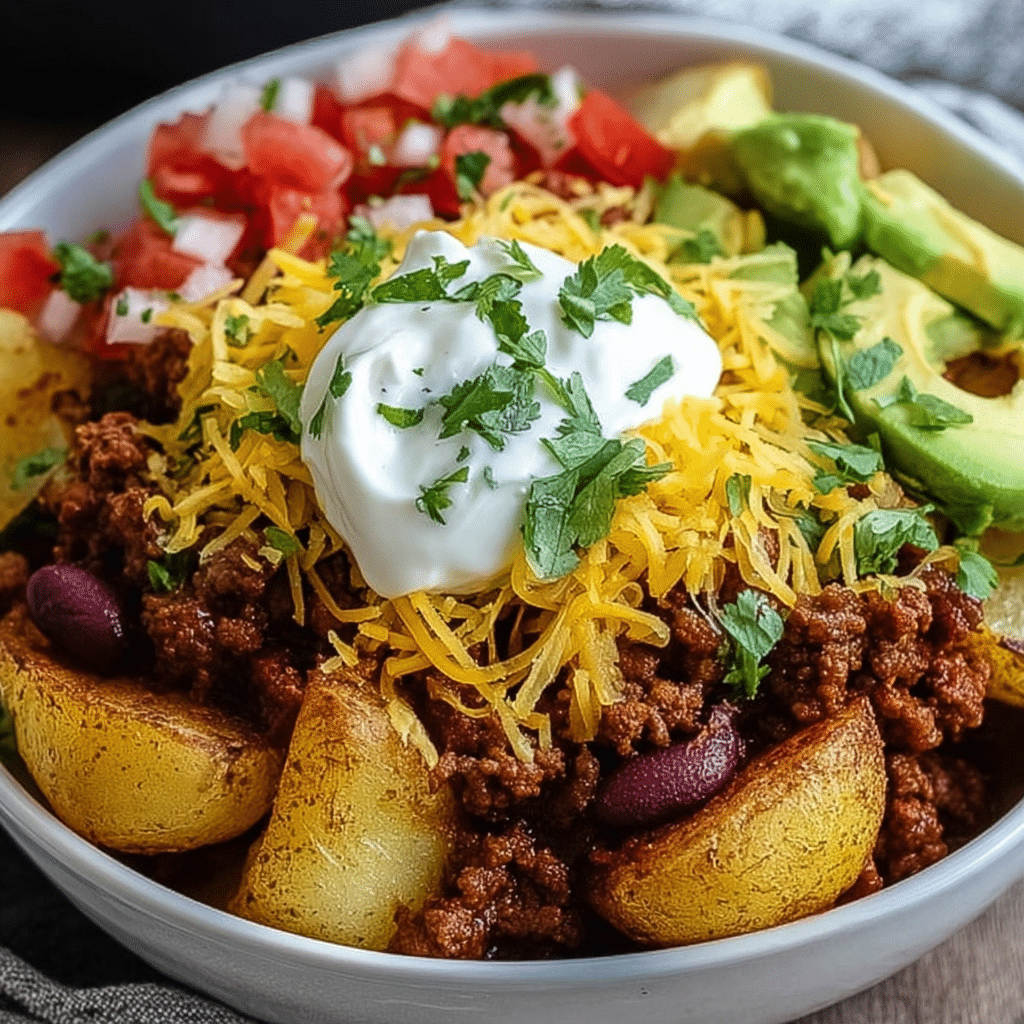
The culinary landscape is constantly evolving, and one of the most practical, satisfying, and nutritionally balanced innovations to emerge in recent years is the concept of the “bowl” meal. Moving away from traditional segmented plates where the protein, starch, and vegetable sit isolated from one another, the bowl format encourages a harmonious blending of textures and flavors in every single bite. The Loaded Potato Taco Bowl perfectly exemplifies this modern approach to dining. By replacing the traditional taco shell or the standard bed of rice with perfectly roasted, aggressively seasoned, crispy russet potatoes, this recipe elevates the standard taco night into a deeply comforting, protein-packed culinary experience. This professional guide will walk you through the precise steps, the culinary science, and the nutritional benefits behind creating this vibrant, 600-calorie masterpiece that delivers a staggering 38 grams of protein per serving. Whether you are a dedicated meal prepper looking for sustainable energy throughout the workday, or a home cook seeking a crowd-pleasing dinner that satisfies both the palate and the macronutrient requirements of your family, this dish is engineered for success.
The Evolution of the Taco Bowl and the Potato Pivot
To understand the brilliance of the Loaded Potato Taco Bowl, we must first look at the anatomy of its predecessors. Traditional tacos are marvels of texture and taste, relying on the crunch of a hard corn shell or the soft, earthy chew of a warm flour tortilla to cradle seasoned meats and fresh toppings. However, tortillas can sometimes become soggy, and they often lack the substantial satiation required for a heavy post-workout meal or a long, demanding day. The taco salad or rice-based burrito bowl sought to solve this by providing a denser base, but rice can sometimes feel monotonous, and standard salads often fail to provide that comforting, savory warmth we crave in a dinner application. Enter the roasted potato. Potatoes are a globally beloved staple, and for good reason. They are highly satiating, incredibly versatile, and act as a perfect blank canvas for bold flavor profiles. By cubing russet potatoes and roasting them at a high temperature with a specific blend of smoked paprika, garlic, and onion powder, you create a foundation that is crispy on the outside, fluffy on the inside, and robust enough to stand up to heavy toppings like ground beef, black beans, and melted cheddar cheese without losing its structural integrity. This “potato pivot” transforms the dish from a simple salad into a hearty, rustic, and immensely satisfying main course that bridges the gap between classic American meat-and-potato dinners and vibrant Mexican-inspired street food.
The Nutritional Profile: Fueling the Body with 38 Grams of Protein
When designing a meal, professional chefs and nutritionists alike look for a balance of macronutrients—proteins, carbohydrates, and fats—alongside a rich array of micronutrients. This Loaded Potato Taco Bowl hits every nutritional benchmark with precision. Providing 38 grams of protein per serving, it is an absolute powerhouse for muscle recovery and satiety. The primary source of this protein comes from the lean ground beef or turkey (specifically the recommended 93/7 lean-to-fat ratio). Lean meats provide essential amino acids, iron, and zinc, which are crucial for energy production and immune function. The secondary protein source comes from the black beans, which not only contribute to the protein count but also offer a massive dose of dietary fiber. Fiber is the unsung hero of digestive health, slowing down the absorption of sugars and keeping you feeling full for hours. The carbohydrates in this dish are primarily complex, sourced from the russet potatoes, beans, and corn. Complex carbohydrates provide sustained energy release, avoiding the sharp blood sugar spikes and subsequent crashes associated with refined grains. Healthy fats are strategically incorporated through the extra virgin olive oil used for roasting, the naturally occurring fats in the cheddar cheese, and the monounsaturated fats found in the fresh avocado topping. Finally, the fresh vegetables—cherry tomatoes, red onion, and cilantro—provide vital antioxidants, vitamin C, and potassium. At roughly 600 calories per serving, this bowl is perfectly calibrated for a substantial dinner that fuels the body efficiently and deliciously.
A Deep Dive into the Ingredients
A recipe is only as good as the sum of its parts. To achieve professional results in your home kitchen, it is vital to understand the role and purpose of each ingredient. The following is the exact list of ingredients required to bring this dish to life, followed by a detailed analysis of their culinary significance.
- 4 medium russet potatoes, peeled and diced into 3/4-inch pieces
- 2 tablespoons olive oil
- 1 teaspoon garlic powder
- 1 teaspoon onion powder
- 1 teaspoon smoked paprika
- Salt and black pepper to taste
- 1 pound ground beef or turkey, 93/7 lean recommended
- 1 teaspoon chili powder
- 1 teaspoon cumin
- 1 small red onion, chopped
- 15 ounces black beans, 1 can, drained and rinsed
- 1 cup corn kernels, fresh, canned, or frozen
- 1 cup shredded cheddar cheese
- 1 cup cherry tomatoes, halved
- 1 medium avocado, diced
- 1/4 cup fresh cilantro, loosely packed and chopped
- Lime wedges, for serving
- Sour cream, for topping
Understanding the Culinary Purpose of Your Ingredients
The russet potato is the absolute best candidate for this recipe due to its high starch and low moisture content. Unlike waxy potatoes (such as red or Yukon gold), the russet’s cellular structure breaks down perfectly under high heat, allowing the exterior to crisp up while the interior steams into a light, fluffy texture. Cutting them into uniform 3/4-inch cubes is critical; if they are too large, the outside will burn before the inside cooks, and if they are too small, they will turn into hard croutons. The olive oil acts as a heat-transfer medium, ensuring the spices adhere to the potatoes while promoting the Maillard reaction—the chemical process that causes browning and creates complex savory flavors. The spice blend for the potatoes (garlic powder, onion powder, and smoked paprika) provides an earthy, umami-rich base. Smoked paprika, in particular, adds a distinct, wood-fired aroma that elevates the entire dish.
For the protein, choosing a 93/7 lean ground beef or turkey ensures that you get maximum protein with minimal saturated fat. While an 80/20 blend is excellent for burgers where the fat is needed for moisture, in a bowl application, excess fat will simply pool at the bottom of the dish, creating a greasy mouthfeel. The chili powder and cumin are the heart of the Mexican-inspired flavor profile. Cumin provides a deep, warm, earthy note, while the chili powder adds a mild heat and complex pepper flavor. The red onion serves a dual purpose: when cooked with the meat, its sharp, pungent bite mellows out into a gentle sweetness, providing an aromatic backbone to the chili-spiced protein. Black beans and corn are classic pairings that introduce distinct textural contrasts; the beans are creamy and dense, while the corn provides a bright, juicy, and sweet pop that cuts through the savory meat.
The toppings are where this dish transitions from a simple meat-and-potato meal into a dynamic, fresh culinary experience. The shredded cheddar cheese, when applied immediately to the hot meat and potatoes, melts into a rich, cohesive binder. The halved cherry tomatoes provide bursts of acidity and freshness, balancing the heavy starches and proteins. The diced avocado contributes a luxurious, buttery texture and cooling effect, which pairs perfectly with the sharpness of the red onion and the earthiness of the cumin. Fresh cilantro acts as the herbal high note, cutting through the richness with its bright, citrusy, and slightly peppery flavor profile. Finally, the lime wedges and sour cream serve as the ultimate garnishes. The lactic acid in the sour cream and the citric acid in the lime juice provide the necessary brightness to awaken the palate, ensuring that the last bite of the bowl is just as exciting as the first.
Essential Equipment Guide for Flawless Execution
Professional cooking relies heavily on utilizing the correct tools for the job. Attempting to cook this recipe with undersized equipment will result in steamed potatoes and unevenly cooked meat. To execute this recipe flawlessly, you will need specific items.
First, a large baking sheet, ideally measuring at least 13×18 inches (commonly known as a half-sheet pan), is mandatory. Potatoes contain a significant amount of water, which is released as steam during the roasting process. If the potatoes are crowded on a small pan, this steam will become trapped, boiling the potatoes instead of roasting them, completely ruining any chance of achieving a crispy exterior. The large surface area allows the moisture to escape and the hot oven air to circulate around each individual cube.
Second, a large 12-inch skillet is necessary for the meat mixture. Similar to the potatoes, ground meat releases moisture as it cooks. A wide skillet provides ample surface area for this moisture to evaporate quickly, allowing the meat to actually brown and sear rather than simmer in its own juices. A wooden spoon is ideal for breaking apart the ground meat without scratching the surface of your cookware, and a sturdy spatula is required for cleanly flipping the potatoes on the baking sheet without tearing their delicate, crispy crusts.
The Preparation Method: A Culinary Walkthrough
Mastering this recipe is an exercise in timing and heat management. By following these steps precisely, you will maximize the flavor extraction from your spices and achieve the perfect textural balance across all ingredients.
Step 1: Preheating and Potato Preparation
Begin by preheating your oven to 425°F (220°C). This high temperature is essential for aggressive roasting; anything lower will result in pale, soft potatoes. While the oven is preheating, take your peeled russet potatoes and meticulously dice them into 3/4-inch pieces. Consistency in size guarantees consistency in cooking time. Place the diced potatoes directly onto your large 13×18 inch baking sheet, spreading them out into a single, uncrowded layer. Drizzle the two tablespoons of olive oil evenly over the potatoes. Follow this by sprinkling the garlic powder, onion powder, smoked paprika, and a generous amount of salt and black pepper over the top. Use your hands or a spatula to toss the potatoes vigorously directly on the pan, ensuring every single cube is coated in a thin film of oil and an even distribution of spices.
Step 2: The Roasting Process and Texture Development
Place the baking sheet on the middle rack of your preheated oven. You will roast the potatoes for a total of 30 to 35 minutes. However, the critical moment occurs exactly at the 15-minute mark. At this point, carefully remove the pan from the oven and use your spatula to flip the potatoes. You will notice that the sides touching the hot metal pan have begun to develop a beautiful, dark golden-brown crust. Flipping them ensures that multiple sides of the potato cube come into contact with the pan, maximizing the crispy surface area. Return the pan to the oven for the remaining 15 to 20 minutes. When finished, they should be deeply golden, delightfully crispy on the edges, and easily pierced with a fork, revealing a fluffy interior.
Step 3: Searing the Protein
Efficient cooking requires multitasking. While the potatoes are undergoing their roasting process, place your large 12-inch skillet over medium heat on the stovetop. Allow the pan to heat up for a minute before adding your 1 pound of ground beef or turkey. As soon as the meat hits the pan, use your wooden spoon to aggressively break it up into small, bite-sized crumbles. Let the meat cook for 7 to 8 minutes, stirring occasionally. You are looking for complete browning, with absolutely no pink remaining. If you opted for the highly recommended 93/7 lean turkey or beef, you will find that there is very little excess fat in the pan, requiring minimal to no draining. However, if you used a fattier 80/20 blend, you must carefully tilt the pan and use a spoon to remove the excess rendered fat; otherwise, your final dish will be overwhelmingly greasy.
Step 4: Blooming Spices and Aromatic Integration
Once the meat is fully browned and drained, it is time to build the flavor profile. Add the teaspoon of chili powder, the teaspoon of cumin, and the chopped small red onion directly into the skillet with the meat. This step is a professional technique known as “blooming” the spices. By cooking the dried spices in the residual fat of the meat, you awaken their fat-soluble flavor compounds, resulting in a much deeper, more resonant flavor than if you had simply added them to a watery sauce. Stir the mixture continuously, allowing the spices to coat the meat and the red onion to begin softening. Cook for approximately 5 minutes, or until the onions turn translucent and release their sweet, aromatic scent.
Step 5: Incorporating the Legumes and Sweet Corn
With the flavor base established, add the 15 ounces of drained and rinsed black beans and the 1 cup of corn kernels into the skillet. Gently fold these ingredients into the spiced meat mixture. You only need to cook this combination for an additional 3 to 4 minutes—just long enough for the beans and corn to heat through completely. Overcooking at this stage will cause the beans to turn to mush and the corn to lose its satisfying pop. Take a small spoonful of the mixture, taste it, and adjust the seasoning, adding a final pinch of salt or pepper if necessary to balance the flavors.
Step 6: Assembly and the Melting Phase
The assembly of the bowl is where the magic happens. Take four wide, shallow serving bowls. Divide the hot, crispy roasted potatoes evenly among the bowls, which will equate to roughly 1 cup of potatoes per portion. Immediately spoon approximately 3/4 cup of the hot meat, bean, and corn mixture directly over the center of the potatoes in each bowl. Speed is critical here. While the meat is still steaming hot, immediately sprinkle 3 to 4 tablespoons of the shredded cheddar cheese over the top of the meat in each bowl. Allow the bowls to sit undisturbed for exactly 30 seconds. The residual heat rising from the meat and potatoes will gently melt the cheddar cheese into a gooey, savory blanket that binds the hot ingredients together.
Step 7: The Fresh Garnish and Final Presentation
To complete the Loaded Potato Taco Bowl, you must introduce the cold, fresh elements to contrast the hot, rich base. Distribute the halved cherry tomatoes and the diced avocado evenly among the four bowls, placing them around the edges for a visually appealing presentation. Scatter a generous pinch of the chopped fresh cilantro over the top of each bowl. Finally, present the bowls immediately with fresh lime wedges on the side and a cool, creamy dollop of sour cream placed right in the center. The dish is now ready to be enjoyed, offering an incredibly complex, deeply satisfying, and nutritionally robust dining experience.
Conclusion
The Loaded Potato Taco Bowl is a testament to the fact that healthy, protein-packed meals do not have to be boring, nor do they require hours of exhausting preparation. By simply swapping traditional taco shells for perfectly roasted, spiced russet potatoes, you elevate a standard weeknight dinner into a nutrient-dense powerhouse that delivers a highly satisfying crunch, a robust array of complex flavors, and a remarkable 38 grams of protein. The interplay between the smoky, crispy potatoes, the earthy, cumin-scented meat, the sweet pop of corn, and the bright acidity of lime and fresh tomatoes creates a symphony of textures and tastes that will please athletes, busy professionals, and families alike. Cooking this dish teaches fundamental culinary techniques, from the science of the Maillard reaction during roasting to the art of blooming spices and balancing fat with acid. Enjoy the process of creating this beautiful meal, and revel in the fact that you are fueling your body with high-quality ingredients executed to perfection.
Frequently Asked Questions
Can I prepare these taco bowls ahead of time for weekly meal prep?
Yes, this recipe is absolutely phenomenal for meal preparation, but it requires a strategic approach to storage. If you are prepping for the week, do not assemble the bowls completely. Store the roasted potatoes in one airtight container and the cooked meat, bean, and corn mixture in a separate airtight container. Keep your fresh garnishes (tomatoes, avocado, cilantro, lime, and sour cream) completely separate in the refrigerator. When you are ready to eat, reheat the potatoes in an air fryer or oven to restore their crispiness, microwave the meat mixture until hot, and then assemble the bowl with the cheese and fresh toppings.
How can I make this recipe completely dairy-free?
Transforming this recipe into a dairy-free meal is incredibly simple and will not compromise the integrity of the dish. You can simply omit the shredded cheddar cheese and sour cream entirely, as the avocado provides plenty of creamy richness on its own. Alternatively, you can substitute the standard cheddar and sour cream with high-quality, plant-based vegan cheese shreds and a dairy-free sour cream alternative made from cashews or oats.
Is it possible to make this recipe vegetarian or vegan?
Absolutely. The foundational elements of the dish—the potatoes, beans, corn, and spices—are entirely plant-based. To make it vegetarian or vegan, you simply need to replace the ground beef or turkey. You can substitute the meat with a commercial plant-based ground meat alternative, cooking it exactly as instructed in the recipe. Alternatively, you can double the amount of black beans, add a can of pinto beans, or crumble firm tofu into the skillet and cook it with the cumin and chili powder for a whole-food, plant-based protein option.
Why did my roasted potatoes turn out soggy instead of crispy?
Soggy potatoes are typically the result of one of three common errors. First, your oven temperature may not have been high enough; 425°F (220°C) is required to evaporate the surface moisture rapidly. Second, you may have overcrowded the baking sheet. If the potatoes are touching or stacked on top of one another, they will steam in their own moisture rather than roast. Always use a large pan and ensure a single, spread-out layer. Third, you may have used too much olive oil, which can cause the potatoes to become greasy and soft rather than crisp.
Can I use a different type of potato, like sweet potatoes or red potatoes?
While russet potatoes are the ultimate choice for achieving a fluffy interior and a crispy exterior due to their high starch content, you can certainly experiment. Sweet potatoes are a fantastic, highly nutritious alternative that will add a beautiful sweetness to contrast the savory taco meat, though they will not crisp up quite as much as russets. Red potatoes or Yukon golds can also be used; they have a waxier, creamier texture and will hold their shape very well, but they will lack the distinct crunch of a properly roasted russet.
What is the best way to reheat leftovers to maintain the best texture?
The microwave is the enemy of crispy potatoes. To properly reheat leftovers, place the potatoes in an air fryer at 375°F (190°C) for about 4 to 5 minutes, or in a hot oven on a baking sheet until they are crispy again. The meat and bean mixture can be gently reheated on the stovetop in a skillet with a tiny splash of water, or in the microwave. Once both hot components are heated, combine them and add your fresh, cold toppings.
Can I freeze the components of this dish?
You can freeze the cooked meat, bean, and corn mixture very successfully in an airtight, freezer-safe container for up to three months. However, freezing the roasted potatoes is not recommended. When cooked potatoes are frozen and thawed, their cellular structure breaks down, resulting in a grainy, mushy texture that cannot be salvaged by reheating. The fresh toppings (avocado, tomatoes, cilantro, sour cream) also cannot be frozen. It is best to freeze only the meat mixture and roast fresh potatoes when you are ready to eat.
Is the 93/7 lean meat strictly necessary, or can I use a fattier blend?
The 93/7 ratio is highly recommended because it provides excellent protein density without adding excessive, heavy grease to the bowl. If you use an 80/20 ground beef, you must be extremely diligent about draining the excess fat from the skillet after browning the meat and before adding the spices. Failing to drain the fat will result in a heavy, oily sauce that will soak into the potatoes and make the entire dish feel unpleasantly greasy.
I don’t like cilantro. What else can I use for a fresh herbal garnish?
Cilantro is a polarizing herb due to genetic differences in how people perceive its taste. If you find cilantro tastes like soap, you can easily omit it. To replace that fresh, green herbal note, you can use finely chopped flat-leaf parsley, or a very light sprinkling of thinly sliced green onion (scallions). A tiny pinch of fresh oregano can also add a beautiful, earthy Mexican flavor profile without the soapy notes of cilantro.
Can I increase the spice level of this taco bowl?
Yes, this recipe is written to have a very mild, family-friendly heat profile. To increase the spiciness, you can add half a teaspoon of cayenne pepper or a teaspoon of red pepper flakes when you add the chili powder and cumin to the meat. You can also dice a fresh jalapeño or serrano pepper and sauté it along with the red onion. Finally, topping the finished bowl with your favorite hot sauce or a spicy fresh salsa is an excellent way to customize the heat level for individual servings.
PrintLoaded Potato Taco Bowl Recipe: A High-Protein, Crispy Weeknight Dinner
This Loaded Potato Taco Bowl combines crispy roasted potatoes with seasoned meat, beans, corn, cheese, and fresh toppings for a high-protein, satisfying taco-inspired meal.
- Prep Time: 20 minutes
- Cook Time: 35 minutes
- Total Time: 55 minutes
- Yield: 4 servings
- Category: Main Course
- Method: Baked + Skillet
- Cuisine: Mexican-Inspired
Ingredients
- For the Potatoes
- 4 medium russet potatoes, peeled and diced into 3/4-inch pieces
- 2 tablespoons olive oil
- 1 teaspoon garlic powder
- 1 teaspoon onion powder
- 1 teaspoon smoked paprika
- Salt and black pepper to taste
- For the Meat & Filling
- 1 pound ground beef or turkey (93/7 lean recommended)
- 1 teaspoon chili powder
- 1 teaspoon cumin
- 1 small red onion, chopped
- 15 oz black beans, drained and rinsed
- 1 cup corn kernels
- Toppings
- 1 cup shredded cheddar cheese
- 1 cup cherry tomatoes, halved
- 1 medium avocado, diced
- 1/4 cup fresh cilantro, chopped
- Lime wedges
- Sour cream
Instructions
- Preheat oven to 425°F (220°C). Toss potatoes with olive oil and seasonings, then spread on a baking sheet.
- Roast for 30–35 minutes, flipping halfway, until crispy and golden.
- While potatoes cook, brown ground beef or turkey in a skillet for 7–8 minutes.
- Season meat with chili powder, cumin, and add red onion. Cook until softened.
- Stir in black beans and corn and heat through.
- Divide potatoes into bowls and top with meat mixture and shredded cheese.
- Add tomatoes, avocado, cilantro, lime, and sour cream before serving.
Notes
- Use turkey for a lighter, higher-protein version.
- For extra crispiness, don’t overcrowd the baking tray.
- Add jalapeños or hot sauce for more heat.
- Great for meal prep—store components separately.