
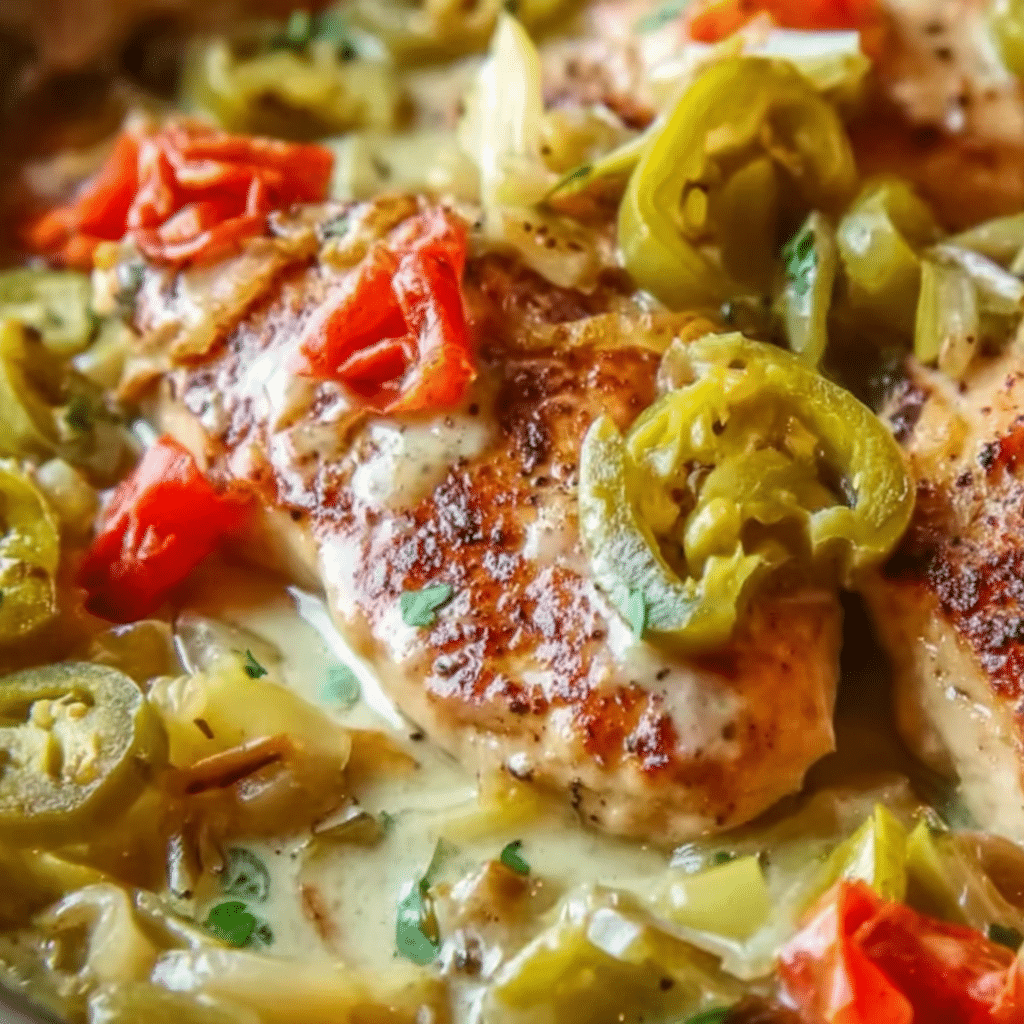
In the fast-paced modern world, the evening meal often becomes a battle between the desire for a gourmet experience and the reality of limited time and energy. We crave complexity—that perfect balance of acidity, creaminess, and heat—but we often settle for the mundane. Enter the Pepperoncini Chicken Skillet. This dish is a culinary revelation, proving that you don’t need a pantry full of rare spices or a sink full of dirty pots to create a meal that tastes like it came from a high-end bistro.
The magic of this recipe lies in the humble pepperoncini. These mild, tangy Mediterranean peppers provide a bright, vinegar-forward punch that cuts through the richness of heavy cream, creating a sophisticated flavor profile known in professional kitchens as “balanced brightness.” When paired with tender chicken breasts and aromatic garlic and onions, the result is a comforting yet vibrant dish that satisfies the soul and the palate alike.
In this guide, we will explore not just the “how” but the “why” behind this recipe. We will discuss the science of searing, the importance of deglazing with brine, and how to achieve the perfect sauce consistency every time.
The Ingredients: A Symphony of Simple Flavors
To achieve the best results, start with high-quality ingredients. Because this recipe relies on a relatively short list of items, the quality of each one will shine through in the final product.
- 1.5 lbs Boneless, Skinless Chicken Breasts: Cut these into uniform 1-inch cubes. Uniformity is key in professional cooking to ensure every piece reaches the safe internal temperature of 74°C at the exact same time.
- 1 (16 ounce) Jar Pepperoncini Peppers: You will need to drain these, but do not discard the liquid. Reserve 1/4 cup of the juice. This brine contains vinegar, salt, and the essence of the peppers, acting as a powerful seasoning agent. Roughly chop the peppers themselves.
- 1 Medium Yellow Onion: Chopped. Yellow onions are preferred here for their high sugar content, which allows for beautiful caramelization and a soft sweetness to balance the peppers.
- 4 Cloves Garlic: Minced. Fresh garlic is non-negotiable; the pre-minced variety in jars often carries a bitter aftertaste that can ruin a delicate cream sauce.
- 2 Tablespoons Extra Virgin Olive Oil: Used for the initial sear.
- 1/2 Cup Low-Sodium Chicken Broth: Using low-sodium broth allows you to control the final saltiness of the dish, which is important since the pepperoncini brine is already quite salty.
- 1/2 Cup Heavy Cream: This provides the luxurious mouthfeel and acts as the emulsifier for the sauce.
- 1 Tablespoon Italian Seasoning: A classic blend usually containing dried oregano, basil, rosemary, and thyme.
- 1/4 Teaspoon Red Pepper Flakes: This adds a “back-of-the-throat” heat. Feel free to increase this if you prefer a spicier profile.
- 1/2 Teaspoon Salt and 1/4 Teaspoon Black Pepper: Adjusted to taste.
- 2 Tablespoons Fresh Parsley: Chopped, for a burst of color and a grassy, fresh finish.
- Optional Bases: Cooked pasta (like penne or rotini) or fluffy white rice are excellent for soaking up the extra sauce.
The Preparation Method: Step-by-Step Mastery
The beauty of a skillet meal is the layering of flavors. Each step builds upon the last, utilizing the “fond”—those delicious browned bits stuck to the bottom of the pan—to create depth.
Step 1: Prepping the Foundations
Before the heat is even turned on, perform your “mise en place.” Pat the chicken cubes dry with paper towels. This is a crucial professional tip: moisture is the enemy of a good sear. If the chicken is wet, it will steam rather than brown. Once dry, season the chicken generously with salt and pepper. Prepare your aromatics (onion and garlic) and chop your peppers so everything is ready to go.
Step 2: The Sear
Heat the olive oil in a large skillet over medium-high heat. You want the oil to be shimmering but not smoking. Add the chicken in a single layer. If your pan is too small, cook in two batches. Overcrowding the pan drops the temperature, causing the chicken to release its juices and boil rather than sear. Cook for 5-7 minutes, turning occasionally, until the chicken is golden-brown and has reached an internal temperature of 74°C. Remove the chicken and set it aside; it will stay juicy if it isn’t overcooked at this stage.
Step 3: Developing the Aromatics
Reduce the heat to medium. The pan will likely have some browned bits on the bottom—this is culinary gold. Add the onions and cook for about 5 minutes. As the onions release moisture, they will begin to loosen those browned bits. Once the onions are translucent and soft, add the minced garlic. Cook for only 60 seconds. Garlic burns easily, and burnt garlic becomes acrid and bitter.
Step 4: Deglazing and Flavor Building
This is the most transformative step. Pour in the 1/4 cup of reserved pepperoncini juice. Use a wooden spoon or spatula to scrape the bottom of the skillet. This process, called deglazing, incorporates all that concentrated chicken flavor back into the sauce. Add the chopped peppers, chicken broth, Italian seasoning, and red pepper flakes. Stir well to combine the elements.
Step 5: The Simmer
Bring the liquid to a gentle simmer. Let it cook for about 5 minutes. During this time, the water in the broth and brine evaporates slightly, concentrating the flavors. The peppers will soften, releasing their tangy oils into the broth.
Step 6: Finishing the Cream Sauce
Lower the heat to low. Pour in the heavy cream and stir constantly. It is vital to use low heat here to prevent the cream from curdling or breaking. Add the cooked chicken (and any juices that pooled on the plate) back into the skillet. Simmer for another 5 minutes. You will see the sauce transform from a thin liquid to a velvety, coat-the-back-of-a-spoon consistency.
Step 7: Garnish and Serve
Taste the sauce one last time. Does it need more salt? A pinch more pepper? Once perfected, sprinkle the fresh parsley over the top. Serve immediately over your choice of pasta or rice.
Culinary Tips for the Perfect Skillet
To elevate this dish from a standard weeknight meal to something truly spectacular, consider these professional nuances:
1. The “Nappe” Consistency: In French cooking, a sauce is ready when it reaches “nappe” consistency. This means it is thick enough to coat a spoon. If you find your sauce is too thin, simmer it for a few extra minutes. If it is too thick, add a tablespoon of chicken broth to loosen it up.
2. Temperature Control: If you notice the cream sauce bubbling too violently, remove it from the heat. High heat can cause the proteins in the cream to clump, resulting in a grainy texture rather than a smooth one.
3. Balancing Acidity: The pepperoncini juice provides a lot of acid. If you find the dish a bit too tangy for your preference, a small pinch of sugar (about 1/4 teaspoon) can help neutralize the sharpness without making the dish taste sweet.
Frequently Asked Questions
Q: Can I use chicken thighs instead of breasts? A: Yes! Chicken thighs are actually more forgiving because they have a higher fat content. They may take an extra 2-3 minutes to cook during the searing phase, but they will result in a very juicy and flavorful dish.
Q: Is this dish very spicy? A: Pepperoncinis are generally considered mild peppers (about 100–500 on the Scoville scale). The primary heat in this recipe comes from the red pepper flakes. If you are sensitive to spice, omit the flakes. If you love heat, add extra flakes or even a splash of hot sauce.
Q: How do I store leftovers? A: This dish stores beautifully in an airtight container in the refrigerator for up to 3 days. When reheating, do so gently on the stovetop over low heat. You may need to add a splash of milk or broth, as the cream sauce tends to thicken significantly when cold.
Q: Can I make this dairy-free? A: You can substitute the heavy cream with full-fat canned coconut milk or a dairy-free heavy cream alternative. Note that coconut milk will add a slight coconut flavor, which may alter the “American-Mediterranean” profile of the dish.
Q: Why is the recipe listed as “Vegetarian” in the summary but uses chicken? A: That is a common labeling error in many digital recipe cards! This is definitely a poultry-based dish. To make it truly vegetarian, you could substitute the chicken with chickpeas or thick slices of cauliflower and use vegetable broth instead of chicken broth.
Q: What is the best pasta shape for this recipe? A: Short, ridged pastas like penne, rotini, or fusilli are best. The ridges and hollow centers are designed to “catch” the creamy sauce and the small bits of chopped pepper and garlic, ensuring you get every flavor in every bite.
Q: Can I freeze this meal? A: It is not recommended to freeze sauces containing heavy cream, as the cream tends to separate and become grainy upon thawing and reheating. It is best enjoyed fresh or from the fridge.
Q: I don’t have Italian seasoning. What can I use? A: You can make your own by mixing equal parts dried oregano, dried basil, and dried thyme. A pinch of dried rosemary or sage also works well.
This Pepperoncini Chicken Skillet is more than just a recipe; it is a testament to the power of high-impact ingredients. By using the brine of the peppers and the richness of the cream, you create a complex, multi-layered meal in under an hour. Whether you are cooking for a busy family or hosting a casual dinner with friends, this dish is sure to become a staple in your culinary repertoire. Happy cooking!
The Art of the One-Pan Dinner: A Deep Dive into the Pepperoncini Chicken Skillet
This Pepperoncini Chicken Skillet is a quick, one-pan dinner with tender chicken, tangy pepperoncini peppers, and a creamy, flavorful sauce perfect for serving over pasta or rice.
- Prep Time: 15 minutes
- Cook Time: 25 minutes
- Total Time: 40 minutes
- Yield: 4–6 servings
- Category: Dinner
- Method: Skillet
- Cuisine: American
Ingredients
- Main Ingredients
- 1.5 lbs boneless, skinless chicken breasts, cut into 1-inch cubes
- 1 (16 oz) jar pepperoncini peppers, drained (reserve 1/4 cup juice), chopped
- 1 medium yellow onion, chopped
- 4 cloves garlic, minced
- 2 tablespoons extra virgin olive oil
- 1/2 cup low-sodium chicken broth
- 1/2 cup heavy cream
- Seasoning
- 1 tablespoon Italian seasoning
- 1/4 teaspoon red pepper flakes (or to taste)
- 1/2 teaspoon salt (or to taste)
- 1/4 teaspoon black pepper (or to taste)
- Garnish & Serving
- 2 tablespoons fresh parsley, chopped
- Optional: cooked pasta or rice for serving
Instructions
- Pat chicken dry and season with salt and pepper.
- Heat olive oil in a large skillet over medium-high heat. Cook chicken 5–7 minutes until browned and cooked through. Remove and set aside.
- Reduce heat to medium. Sauté onion for 5 minutes until softened, then add garlic and cook 1 minute.
- Add reserved pepperoncini juice, scraping browned bits from the pan.
- Stir in chopped pepperoncini, chicken broth, Italian seasoning, and red pepper flakes. Simmer 5 minutes.
- Add heavy cream and return chicken to the skillet. Simmer another 5 minutes until sauce thickens.
- Garnish with parsley and serve over pasta or rice if desired.
Notes
- Adjust spice level by adding more or fewer red pepper flakes.
- For extra richness, add a small amount of parmesan cheese.
- Chicken thighs can be used instead of breasts for more tenderness.
- Great for meal prep and reheats well.