
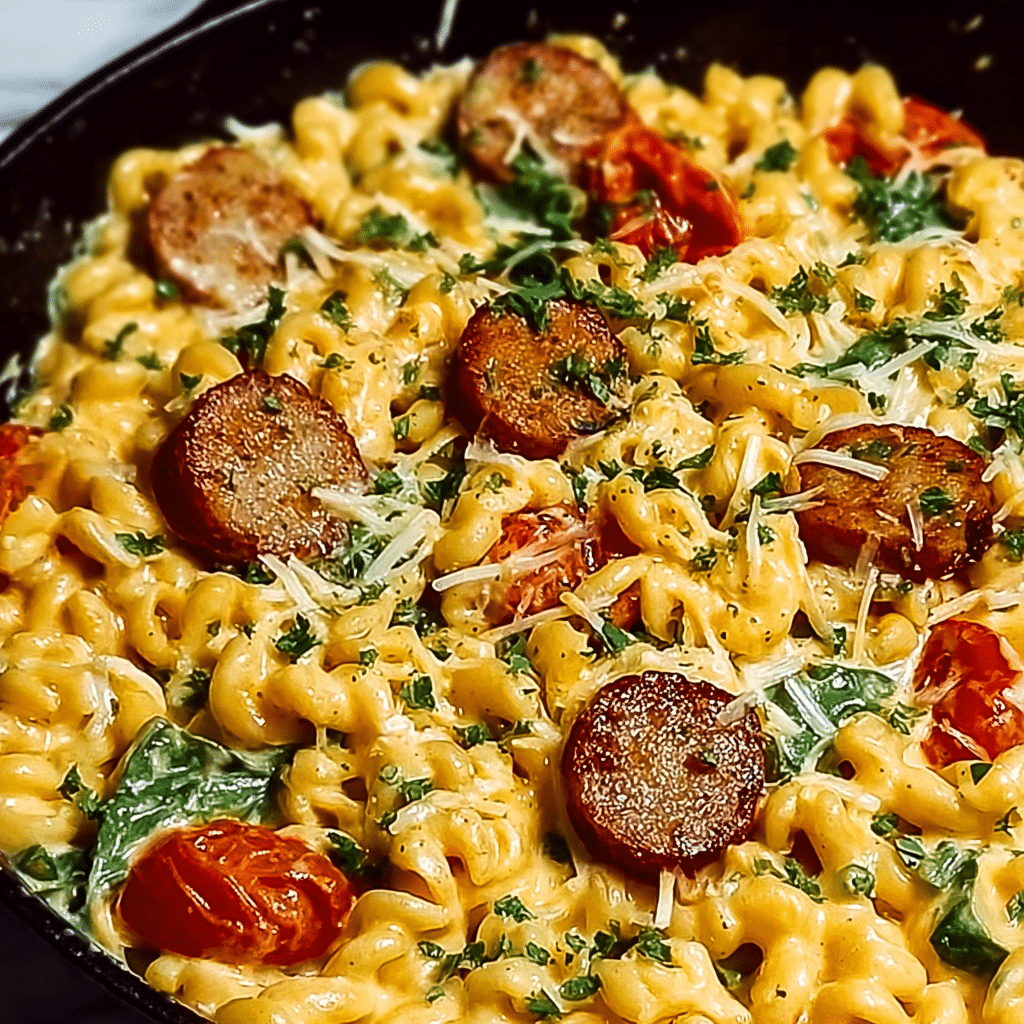
Let us speak frankly about the phrase “creamy pasta dinner.” For many home cooks, those three words conjure a specific, slightly grim image: a pale, gluey sauce clinging desperately to overcooked noodles, the whole affair requiring at least two saucepans, a colander, a whisking arm that feels like it’s running a marathon, and—worst of all—a separate dish for the protein, because God forbid anything touch before the final plate. By the time you’re done, your kitchen looks like a dairy bomb went off, and you’re too exhausted to enjoy the very meal you sacrificed your evening to create.
Now, set that image aside. Burn it. Let it drift away like a bad memory. Because what I am about to describe to you—this so-called “White Cheddar Ranch Sausage Magic Pasta”—is not that dinner. It is, in fact, the anti-that-dinner. It is the dinner that laughs in the face of multiple pots. It is the dinner that understands you have thirty minutes, a single large skillet, and a desperate, primal need for something creamy, smoky, tangy, and deeply, almost embarrassingly satisfying. It is pasta that cooks in its own sauce, soaking up chicken broth and milk like a delicious, carb-heavy sponge, while smoked sausage provides salty, fatty pops of joy and white cheddar melts into a velvety river of ranch-scented decadence.
The name says it all, doesn’t it? Magic. Not because there’s anything supernatural involved—though the way the pasta comes out perfectly al dente without a separate boiling pot does feel a little like witchcraft—but because the sum is so absurdly greater than its parts. A packet of ranch seasoning. Some smoked sausage. Baby spinach that wilts into obedient submission. Roasted red peppers for sweetness and color. And a whole lot of white cheddar, because life is short and subtlety is overrated.
This is not fine dining. This is not a recipe you’ll serve to impress a vegan or a cardiologist. This is a recipe you’ll serve to hungry people—including yourself—on a weeknight when the only thing standing between you and existential despair is a hot, cheesy, one-pan wonder. And friend, it delivers.
The Skillet: Your New Best Friend (Sorry, Your Actual Friends)
Let’s start with the vessel. The recipe calls for a large skillet, and I’m going to be more specific: use a 12-inch skillet with high sides, preferably non-stick or well-seasoned cast iron. Why high sides? Because you’re about to pour two cups each of milk and chicken broth into this thing, add dry rotini, and then simmer it all covered for up to fifteen minutes. Low-sided skillets will threaten to overflow every time you stir. You don’t need that drama.
The recipe begins with olive oil over medium-high heat. This is the foundation. Olive oil brings a fruity, slightly peppery note that won’t compete with the smoked sausage but will add a whisper of Mediterranean soul. You could use avocado oil or even butter here, but olive oil’s higher smoke point means you can really brown that sausage without sending your fire alarm into hysterics.
The Sausage: Smoked, Sliced, and Absolutely Non-Negotiable
Fourteen ounces of smoked sausage, sliced into rounds. Let’s pause and appreciate the choice of smoked sausage over, say, Italian sausage or kielbasa or chorizo. Smoked sausage—the kind you find in the supermarket near the hot dogs, often labeled “smoked turkey sausage” or “beef smoked sausage”—has two superpowers. First, it’s already fully cooked, which means you’re not worrying about undercooked pork; you’re just browning for flavor. Second, the smoking process gives it a deep, almost bacon-like savoriness that stands up beautifully to the creamy, tangy ranch-and-cheddar sauce.
You’ll brown those rounds in the hot olive oil until they’re golden on both sides. This takes maybe three to four minutes total. Don’t crowd the pan—if your skillet is small, work in batches. You’re not trying to cook the sausage through (it’s already cooked); you’re trying to create a crust. That crust is flavor. Those browned bits left behind in the pan? That’s fond, the most beautiful French word for “the stuff you definitely don’t want to wash off.” We’ll get to that.
Once the sausage is browned, remove it and set it aside. This feels counterintuitive—”But it’s a one-pan dish!” you protest. Yes, but the sausage has done its job for now. It has donated its flavorful fat and its browned residue to the pan’s memory. Now it must wait while the sauce and pasta do their thing.
The Aromatics: Garlic’s Thirty Seconds of Fame
Into the same pan—do not wipe it out, you savage—go two tablespoons of butter and three cloves of minced garlic. The butter melts into the residual sausage fat, creating a hybrid cooking medium that is both rich and savory. The garlic hits the pan and the recipe tells you to sauté for about thirty seconds until fragrant.
Thirty seconds is not a suggestion; it’s a boundary. Garlic is a diva. Give it too little heat, and it remains aggressively raw, biting and harsh. Give it too much time, and it burns—acrid, bitter, and impossible to hide. Thirty seconds over medium-high heat is the sweet spot: the garlic softens, its sulfurous compounds mellow into sweetness, and your kitchen suddenly smells like the kind of restaurant where the breadsticks are free and the wine pours are generous.
Do not walk away during these thirty seconds. Do not check your phone. Do not answer the door. Stay with the garlic. It demands your full attention, and it rewards that attention with fragrance that will make your neighbors text you to ask what you’re cooking.
The Liquid Alchemy: Broth, Milk, and the Magic of Deglazing
Now comes the moment that separates the confident cook from the fearful one. You pour in two cups of chicken broth and two cups of milk. And then—and this is crucial—you scrape up any browned bits from the bottom of the pan.
Those browned bits are the ghost of the sausage past, plus the butter, plus the garlic. They are concentrated umami, and they’ve been waiting for liquid to set them free. Use a wooden spoon or a silicone spatula to scrape vigorously. The liquid will bubble and steam, and the bits will dissolve, turning your pale milk-and-broth mixture into something that already smells like dinner.
This process is called deglazing, but let’s call it what it is: treasure hunting. You are hunting for every last speck of flavor left behind by the ingredients that came before. Leave none behind. A clean pan at this stage is a failure. A pan with a rich, brown film dissolving into the liquid is a promise.
Once the bottom is clean, you stir in the ranch seasoning packet. Yes, the whole packet. Do not judge. Ranch seasoning—that mix of buttermilk powder, garlic powder, onion powder, dill, parsley, and a few secret-weapon ingredients—is a modern culinary miracle. It brings tanginess, herbal notes, and a creamy richness that plays beautifully with the white cheddar. This is not the time for homemade ranch seasoning from scratch (though you could; I won’t stop you). This is the time for the little envelope that costs ninety-nine cents and delivers consistent, crowd-pleasing flavor.
Bring the liquid to a gentle simmer. Not a roaring boil—that can break the milk’s emulsion and lead to curdling. A gentle simmer, with small bubbles breaking the surface, is your target.
The Pasta Gambit: Cooking in Sauce, Because Rules Are Made to Be Broken
Here’s where the magic happens. You add twelve ounces of rotini pasta directly to the simmering liquid. No separate pot of salted water. No colander. No draining. Just dry pasta dropped into the sauce, where it will cook, absorb liquid, and release starch—and that starch is your secret weapon for a creamy sauce without needing heavy cream or a roux.
Rotini is the ideal shape here. Its corkscrew spirals catch sauce like tiny flavor traps. The ridges and curves hold onto shredded cheese, bits of spinach, and chopped roasted red peppers. Penne or fusilli would work; spaghetti would be a disaster, sliding around in the sauce and failing to capture the chunky bits. Honor the rotini.
You’ll want to make sure the pasta is mostly submerged. If some pieces are poking up like periscopes, gently push them down. Then cover the skillet and cook, stirring occasionally, for twelve to fifteen minutes, until the pasta is al dente.
This is the part that feels like magic, but it’s actually science. The pasta absorbs the chicken broth and milk, infusing every noodle with savory, creamy flavor from the inside out. At the same time, it releases starch into the liquid, thickening it naturally. When you lift the lid after twelve minutes, you won’t see a pool of broth with pasta swimming in it. You’ll see a skillet full of nearly cooked pasta in a sauce that has transformed from thin liquid to something approaching a velvety emulsion.
Stir occasionally to prevent sticking. Different stovetops run at different temperatures; if your liquid evaporates too quickly and the pasta isn’t tender, add a splash more broth or milk. If it’s still soupy after fifteen minutes, cook uncovered for another two to three minutes to reduce.
The Cheese: White Cheddar and the Art of Low-Heat Melting
Once the pasta is al dente, you lower the heat. This is critical. High heat and melted cheese are enemies—the cheese will seize, turn grainy, or separate into oily pools of sadness. Low heat is cheese’s friend.
Now add one and a half cups of shredded white cheddar cheese. Not pre-shredded from a bag if you can avoid it (those contain anti-caking agents that inhibit smooth melting). Shred it yourself from a block. The effort takes ninety seconds and elevates your sauce from “good for a weeknight” to “why is this so creamy and luxurious?”
Stir the cheese in gradually, a handful at a time, allowing each addition to melt before adding the next. White cheddar brings sharpness—a tangy, slightly nutty edge that cuts through the richness of the milk and butter. Yellow cheddar would work but would change the color profile from “elegant cream” to “cheesy orange.” Both are delicious; one is more photogenic.
As the cheese melts, the sauce will thicken further. You’re looking for a smooth, cohesive, spoon-coating consistency. If it’s too thick, add a splash of milk. If it’s too thin, let it simmer for another minute or two. The pasta will continue to absorb liquid even off the heat, so aim for slightly looser than your ideal final texture.
The Vegetables: Spinach and Roasted Red Peppers, The Supporting Cast
Now fold in two cups of baby spinach and a half cup of chopped roasted red peppers. The spinach will wilt in about sixty seconds, shrinking dramatically from a mountain of leaves to a modest, dark-green presence. This is not a tragedy; it’s concentration. That small amount of wilted spinach packs more flavor and nutrients than the raw pile ever could.
Roasted red peppers bring sweetness, smokiness, and a gentle acidity that balances the richness of the cheese and ranch. They’re also beautiful—those bright red flecks against the creamy, pale sauce and dark green spinach make the dish look like you tried, even though you barely did.
If you don’t have roasted red peppers, sun-dried tomatoes (oil-packed, drained and chopped) make an excellent substitute, adding even more umami and a chewy texture. If you don’t have baby spinach, chopped kale works but needs an extra two minutes to soften. Frozen spinach, thawed and squeezed dry, is also fine.
The Reunion: Sausage Returns, Seasoning Happens, Dinner Is Saved
Finally, return the browned sausage rounds to the pan. Stir everything together gently, making sure the sausage is evenly distributed. The sausage has been waiting patiently, and now it’s rewarded with a warm, cheesy, ranch-scented embrace.
Taste. Then taste again. Then add salt and pepper to taste. Be careful with salt—the ranch seasoning and cheese both contain salt, and the smoked sausage is salty on its own. You may need very little. Freshly cracked black pepper, however, is almost always welcome, adding a gentle heat that complements the creaminess.
Let the whole skillet sit for two minutes off the heat before serving. This allows the sauce to settle, the flavors to meld, and the pasta to absorb the last bit of liquid. Then serve warm, directly from the skillet if you’re feeling rustic (or if you hate doing dishes).
The Emotional Arc of the One-Pan Creamy Pasta
Let’s step back and appreciate what just happened. In one skillet, over the course of about thirty minutes, you created a dish that delivers:
- Texture contrast: Soft pasta, tender spinach, chewy sausage, slightly firm roasted peppers.
- Temperature harmony: Everything warm, nothing cold except perhaps the beer you’re drinking alongside.
- Flavor layering: Smoky from the sausage, tangy from the ranch, sharp from the cheddar, sweet from the peppers, earthy from the spinach.
- Emotional satisfaction: The deep, primal pleasure of a creamy, cheesy, carb-heavy meal that required minimal cleanup.
This is not accidental. This is the result of a recipe designed by someone who understands that modern home cooking is not about perfection—it’s about getting delicious food on the table without sacrificing your evening to the kitchen gods. The one-pan method is a gift. Accept it gratefully.
Variations and Substitutions: Make It Yours
The beauty of this recipe is its flexibility. Here are some ways to adapt it to your pantry, your dietary needs, or your whims.
Change the protein: Smoked sausage is ideal, but kielbasa, andouille (for heat), or even diced ham work beautifully. No sausage? Cooked, shredded chicken can be added with the spinach. For a vegetarian version, use plant-based sausage or add a can of drained chickpeas with the spinach.
Change the cheese: White cheddar is lovely, but Gruyère adds nuttiness, Gouda adds smokiness, and Monterey Jack adds mild creaminess. A mix of cheddar and Parmesan adds sharpness and umami.
Change the vegetables: No spinach? Kale, chard, or even frozen peas work. No roasted red peppers? Sun-dried tomatoes, artichoke hearts, or a handful of sautéed mushrooms.
Make it spicy: Add red pepper flakes with the garlic, use hot smoked sausage, or stir in a teaspoon of hot sauce at the end.
Make it lighter: Use low-fat milk (though the sauce won’t be as creamy), reduce the butter to one tablespoon, and use turkey smoked sausage. The ranch packet is non-negotiable—some pleasures are worth keeping.
Gluten-free: Use gluten-free rotini and ensure your ranch seasoning is gluten-free (most are, but check the label). The cooking time may vary; start checking at ten minutes.
Troubleshooting the Common Tragedies
Even magic can go wrong. Here’s how to fix it.
Problem: The sauce is grainy or curdled.
Solution: You overheated the milk or added the cheese over too high heat. Next time, lower the heat before adding cheese and stir constantly. For now, remove from heat, add a splash of cold milk, and whisk vigorously. It won’t be perfect, but it will be edible.
Problem: The pasta is mushy.
Solution: You overcooked it. Next time, start checking at ten minutes and remove from heat when it’s still slightly firmer than you want—it will continue to soften as it sits.
Problem: The sauce is too thin.
Solution: Cook uncovered for another two to three minutes, stirring frequently, to reduce. Alternatively, make a cornstarch slurry (one tablespoon cornstarch mixed with two tablespoons cold water) and stir it in.
Problem: The sauce is too thick.
Solution: Add a splash of chicken broth or milk and stir over low heat until loosened.
Problem: The dish tastes bland.
Solution: You probably forgot to season with salt and pepper at the end. Add a pinch of salt, a generous grind of black pepper, and—if you’re feeling bold—a squeeze of lemon juice or a dash of hot sauce.
Serving Suggestions and Final Flourishes
This dish is a complete meal on its own, but a few accompaniments elevate it. A simple green salad with vinaigrette cuts the richness. Crusty bread for sopping up the remaining sauce is not optional—it’s a moral imperative. A sprinkle of fresh parsley or chives adds color and freshness.
For a dinner party twist, transfer the finished pasta to a baking dish, top with additional shredded cheddar and breadcrumbs, and broil for two minutes until golden and bubbly. The result is a creamy, crunchy casserole that will earn you undeserved praise.
Leftovers, if they exist, reheat beautifully. Add a splash of milk when reheating in a skillet over low heat. The microwave will work but may separate the sauce; stir every thirty seconds and add a tablespoon of milk if needed.
Conclusion: The Magic Is Real
The word “magic” in the recipe title is not hyperbole. It’s an acknowledgment that some dishes transcend their humble ingredients through technique, timing, and a little bit of trust. Trust that the pasta will cook in the sauce. Trust that the cheese will melt into creaminess. Trust that the spinach will wilt, the sausage will brown, and the roasted red peppers will add their sweet, smoky whisper.
This is not a recipe for days when you have hours to braise and reduce and carefully plate. This is a recipe for days when you need dinner to be easy, fast, and spectacularly good without apology. It’s for the Tuesday when the rain won’t stop, the to-do list won’t shrink, and the only thing that makes sense is a skillet full of creamy, cheesy, ranch-scented pasta with bites of smoked sausage hidden throughout like delicious little surprises.
So make the magic. Brown the sausage. Melt the cheese. Fold in the spinach until it surrenders. And then sit down with your skillet—no plate required if you’re eating alone—and enjoy the quiet triumph of a dinner that asked for little and gave everything. The one-pan life is a good life. Live it.
PrintThe Gospel of the One-Pan White Cheddar Ranch Sausage Magic Pasta: How to Achieve Creamy, Smoky, Brain-Bendingly Delicious Dinner Without Losing Your Sanity
This one-pan white cheddar ranch sausage magic pasta is a creamy easy dinner packed with smoky sausage, rotini, spinach, and bold ranch flavor.
- Prep Time: 10 minutes
- Cook Time: 20 minutes
- Total Time: 30 minutes
- Yield: 5 servings
- Category: Main Dish, Pasta
- Method: Stovetop
- Cuisine: American
Ingredients
- 12 oz rotini pasta
- 14 oz smoked sausage, sliced
- 1 1/2 cups white cheddar cheese, shredded
- 1 packet ranch seasoning mix
- 2 cups milk
- 2 cups chicken broth
- 2 tbsp butter
- 3 cloves garlic, minced
- 2 cups baby spinach
- 1/2 cup roasted red peppers, chopped
- 1 tbsp olive oil
- Salt and pepper to taste
Instructions
- Heat olive oil in a large skillet over medium-high heat.
- Add sausage and brown on both sides. Remove and set aside.
- Melt butter in same pan and sauté garlic for 30 seconds.
- Add chicken broth and milk, scraping browned bits.
- Stir in ranch seasoning and bring to a simmer.
- Add rotini, cover, and cook 12–15 minutes until tender.
- Lower heat and stir in white cheddar until creamy.
- Fold in spinach and roasted red peppers.
- Return sausage and mix well.
- Season to taste and serve warm.
Notes
- Stir occasionally so pasta cooks evenly.
- Add extra broth if sauce becomes too thick.
- Use sharp cheddar for stronger flavor.