
Introduction
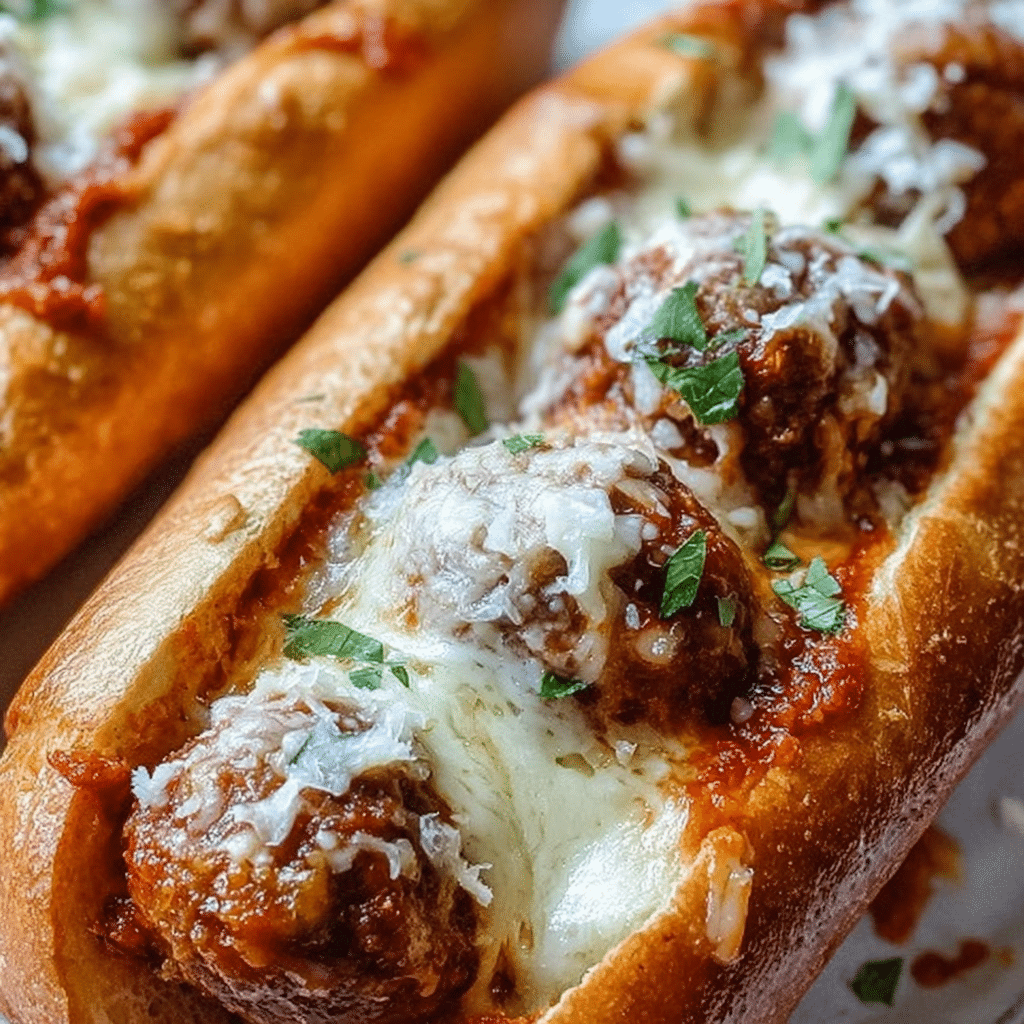
There are certain dishes that transcend trends, diets, and decades. They are the foods we craved as children, the meals we request on difficult days, and the first thing we think of when someone says “comfort food.” The meatball sub belongs to this hallowed category. A warm, toasted hoagie roll piled high with tender, juicy meatballs, draped in rich marinara sauce, and buried under a blanket of melted, stretchy cheese—it is a sandwich that delivers pure, unapologetic satisfaction. The Easy Cheesy Meatball Subs recipe presented here takes this classic and makes it accessible for home cooks of all skill levels, without sacrificing an ounce of flavor or texture.
What makes this particular recipe so successful is its attention to the fundamentals. The meatballs themselves are simple but perfectly balanced: a blend of ground beef (or beef and pork for extra juiciness), breadcrumbs for tenderness, a single egg to bind, grated onion for moisture and sweetness, garlic for aromatic depth, and a classic Italian seasoning blend. These are not fussy, overworked meatballs. They come together in minutes, bake in the oven hands-free, and then simmer briefly in marinara sauce to absorb even more flavor. The assembly is equally thoughtful: toasted rolls provide structural integrity against the saucy meatballs, a double layer of mozzarella and provolone creates the ultimate cheesy crust, and a final shower of grated parmesan adds a salty, nutty finish.
The beauty of this recipe lies in its flexibility. You can bake the meatballs or pan-fry them. You can use all beef or a beef-pork mixture. You can add provolone or stick with mozzarella. You can garnish with fresh basil or parsley—or skip it entirely. Yet no matter which path you choose, the result is consistently delicious: a hearty, handheld meal that satisfies like few others can.
This article will guide you through every step of creating these subs at home. We will cover ingredient selection in detail, provide two methods for cooking the meatballs (oven and stovetop), explain how to build the subs for maximum structural integrity, and conclude with a comprehensive FAQ section that addresses everything from gluten-free adaptations to make-ahead strategies and sauce alternatives. By the time you finish reading, you will have the confidence to make restaurant-quality meatball subs in your own kitchen, likely for a fraction of the cost.
Preheat your oven to 400°F (200°C). Let us make some sandwiches.
Ingredients
Read through this list carefully. Each ingredient serves a specific purpose, and understanding why they matter will help you achieve the best possible results.
For the Meatballs
- 1 lb ground beef or a mix of beef and pork: The foundation of any great meatball. Using 100% ground beef (80/20 or 85/15 lean-to-fat ratio) yields a robust, beefy flavor. However, a combination of ½ lb ground beef and ½ lb ground pork creates even more tender, juicy meatballs because pork has a higher fat content and a slightly sweeter flavor. Avoid extra-lean ground beef (90/10 or higher), as it will produce dry, crumbly meatballs. If you want to experiment, ground turkey or chicken can be substituted, but add 1 tablespoon of olive oil to compensate for the lower fat content.
- ½ cup breadcrumbs: Breadcrumbs act as a binder and a tenderizer. They absorb moisture and fat, then release it during cooking, keeping the meatballs moist. Use plain, unseasoned breadcrumbs (panko works beautifully for a lighter texture). Avoid Italian-seasoned breadcrumbs unless you reduce the Italian seasoning in the recipe. For a gluten-free version, use gluten-free breadcrumbs or crushed pork rinds.
- 1 large egg: The egg is a binder. It holds the meatball ingredients together, preventing them from falling apart during cooking. Do not skip it. If you have an egg allergy, you can substitute a “flax egg” (1 tablespoon ground flaxseed mixed with 3 tablespoons water, let sit for 5 minutes) or ¼ cup of unsweetened applesauce.
- ¼ cup grated onion: This is a secret weapon. Grating the onion (rather than dicing) releases its juices, which add moisture and a subtle sweetness to the meatballs. The fine texture also melts into the meatball, so picky eaters never notice chunks of onion. To grate an onion, use the fine side of a box grater or a Microplane. If you do not have a grater, mince the onion very finely and add 1 tablespoon of water.
- 2 cloves garlic, minced: Fresh garlic provides pungent, aromatic warmth. Mince it finely so it distributes evenly. Do not substitute garlic powder unless absolutely necessary; fresh garlic is superior here. For a milder garlic flavor, roast the garlic first or use only 1 clove.
- 1 tsp Italian seasoning: This dried herb blend typically contains oregano, basil, rosemary, thyme, and sometimes marjoram. It provides the quintessential Italian flavor profile. If you do not have Italian seasoning, mix ½ teaspoon dried oregano, ¼ teaspoon dried basil, and ¼ teaspoon dried thyme.
- ¾ tsp salt: Salt is a flavor enhancer and also affects texture by helping proteins retain moisture. Use kosher salt or sea salt. If using table salt, reduce to ½ teaspoon because it is denser.
- ½ tsp black pepper: Freshly ground black pepper adds a mild, earthy heat. Pre-ground pepper works but lacks the same aromatic punch.
For the Sauce and Assembly
- 2 cups marinara sauce: Marinara is a simple tomato sauce made from tomatoes, garlic, onions, and herbs. Choose a high-quality jarred brand (such as Rao’s, Victoria, or Newman’s Own) for the best flavor, or make your own from crushed tomatoes and seasonings. Avoid “pasta sauce” with added sugar or vegetables; marinara is cleaner and brighter. You will simmer the meatballs in this sauce to infuse them with tomatoey goodness.
- 4 hoagie or sub rolls: The vessel is almost as important as the filling. Look for hoagie rolls that are soft on the inside with a slightly crisp crust. They should be about 6–8 inches long. Italian rolls, French bread (cut into sections), or even hot dog buns in a pinch all work. Avoid rolls that are too dense or too airy, as they will either be tough or fall apart.
- 1 ½ cups shredded mozzarella cheese: Mozzarella is the classic melting cheese for meatball subs. It is mild, milky, and becomes gloriously stretchy when melted. Shred your own from a block for the best melt (pre-shredded cheese contains anti-caking agents). Low-moisture mozzarella is ideal; fresh mozzarella releases too much water.
- 4 slices provolone cheese (optional): Provolone adds a sharper, tangier, slightly nutty flavor that complements the mozzarella beautifully. It also melts into a golden, bubbly layer. This is optional but highly recommended for an extra-cheesy sub. If you skip it, simply increase the mozzarella to 2 cups.
- ¼ cup grated parmesan cheese: Parmesan provides a salty, umami-packed finish. Grate it fresh from a wedge of Parmigiano-Reggiano if possible. The pre-shredded green can works in a pinch but lacks the same depth.
- 1 tbsp butter (optional, for toasting rolls): Butter adds richness and helps the rolls achieve a golden, crispy exterior. Use salted or unsalted. You can substitute olive oil or omit entirely if you prefer untoasted rolls.
- Fresh basil or parsley for garnish (optional): Fresh herbs add color, brightness, and a fresh note that cuts through the richness. Basil offers a sweet, peppery flavor; parsley is more neutral and slightly peppery. Chiffonade the basil (stack leaves, roll tightly, slice thinly) or roughly chop the parsley.
Preparation Method
This recipe unfolds in four phases: making the meatballs, cooking them, simmering in sauce, and assembling the subs. Total time is approximately 45 minutes. Serves 4.
Phase 1: Preheat and Prepare
Step 1: Preheat the oven.
Preheat your oven to 400°F (200°C). Position an oven rack in the middle position. If you plan to toast your rolls under the broiler later, move a rack to the upper third of the oven (about 6 inches from the broiler element).
Step 2: Line a baking sheet.
Line a large, rimmed baking sheet with parchment paper. This prevents sticking and makes cleanup easy. If you do not have parchment, lightly grease the baking sheet with cooking spray or a thin layer of oil.
Step 3: Prepare your mise en place.
Grate the onion using the fine side of a box grater. Mince the garlic. Measure out the breadcrumbs, Italian seasoning, salt, and pepper. Crack the egg into a small bowl. Have your ground meat ready.
Phase 2: Make the Meatballs
Step 4: Combine the ingredients.
In a large mixing bowl, combine the ground beef (or beef-pork mixture), ½ cup breadcrumbs, 1 large egg, ¼ cup grated onion, 2 cloves minced garlic, 1 teaspoon Italian seasoning, ¾ teaspoon salt, and ½ teaspoon black pepper.
Step 5: Mix until just combined.
Use your hands (clean) or a fork to mix the ingredients together. The key phrase here is do not overmix. Overmixing develops the proteins in the meat, resulting in dense, tough, rubbery meatballs. Mix only until the ingredients are evenly distributed and the mixture holds together when gently pressed. You should still see small bits of meat; a homogeneous paste is a sign of overmixing.
Step 6: Roll the meatballs.
Using your hands, roll the mixture into meatballs that are 1 to 1.5 inches in diameter. A 1.5-inch meatball is roughly the size of a golf ball. You should get approximately 16 to 20 meatballs from 1 pound of meat. Place each meatball on the parchment-lined baking sheet, spacing them about 1 inch apart.
Phase 3: Cook the Meatballs
You have two excellent options here. The oven method is hands-off and produces evenly cooked meatballs with less mess. The pan-fry method creates a deeper, crustier exterior. Choose whichever suits you.
Oven Method (Recommended for ease):
- Place the baking sheet with the meatballs in the preheated 400°F (200°C) oven.
- Bake for 18–20 minutes, until the meatballs are browned on the outside and cooked through. An instant-read thermometer inserted into the center of a meatball should read 160°F (71°C) for beef or 165°F (74°C) if using poultry.
- No need to flip them halfway through, though you can if you want more even browning.
Pan-Fry Method (For a crustier exterior):
- Heat 1 tablespoon of olive oil in a large skillet over medium-high heat.
- Add the meatballs in a single layer (work in batches if needed to avoid overcrowding).
- Cook for 8–10 minutes, turning occasionally with tongs, until all sides are evenly browned and the meatballs are cooked through.
- Drain on a paper towel-lined plate before adding to the sauce.
Phase 4: Simmer in Marinara
Step 7: Heat the marinara sauce.
While the meatballs cook, pour 2 cups of marinara sauce into a large saucepan or skillet. Place over medium heat and bring to a gentle simmer. Stir occasionally to prevent sticking.
Step 8: Add the meatballs.
Once the meatballs are fully cooked, transfer them directly into the simmering marinara sauce. Gently stir to coat them in the sauce.
Step 9: Simmer to meld flavors.
Reduce the heat to low and let the meatballs simmer in the sauce for 10–15 minutes. This step is crucial: it allows the meatballs to absorb the tomatoey, herby flavors of the marinara while the sauce thickens slightly around them. Stir occasionally, being careful not to break the meatballs.
Phase 5: Prepare the Rolls
Step 10: Preheat the broiler (if using).
If you plan to broil the assembled subs, turn your oven’s broiler to high. Move an oven rack to the upper third position, about 6 inches from the broiler element.
Step 11: Split the rolls.
Take the 4 hoagie or sub rolls. Using a serrated knife, slice each roll open lengthwise, but do not cut all the way through. You want a hinge—like a book—so the two halves remain attached. This prevents the filling from falling out the back.
Step 12: Toast the rolls (optional but recommended).
For extra flavor and structural integrity, brush the cut sides of the rolls with the 1 tablespoon of melted butter (or drizzle with olive oil). Place the rolls cut-side up on a baking sheet. Toast in the oven (not under the broiler yet) at 400°F for 3–5 minutes, until lightly golden and crisp. If your oven is already at 400°F from baking the meatballs, this is perfect.
Phase 6: Assemble the Subs
Step 13: Spoon the meatballs into the rolls.
Place the toasted rolls on a baking sheet (or directly in a baking dish if your rolls are unstable). Using a slotted spoon (to avoid excess sauce, which can make the roll soggy), spoon 4–5 meatballs into each roll, nestling them down into the crevice. Drizzle a little extra marinara sauce over the meatballs—about 1–2 tablespoons per sub.
Step 14: Add the cheese.
Sprinkle or layer the shredded mozzarella cheese evenly over the meatballs in each roll (about ⅓ cup per sub). If using provolone cheese, place one slice of provolone over the mozzarella on each sub. The provolone adds a tangy, sharp note and an extra layer of meltiness.
Step 15: Broil the subs.
Place the assembled subs (still on the baking sheet) under the preheated broiler. Broil for 2–3 minutes, watching very closely to prevent burning. The cheese is ready when it is fully melted, bubbly, and has golden-brown spots. Do not walk away—broilers can go from melted to burnt in seconds.
Step 16: Finish with parmesan and herbs.
Remove the subs from the oven. Immediately sprinkle the ¼ cup of grated parmesan cheese over the hot, melted cheese. Garnish with fresh basil or parsley, if desired. The residual heat will warm the parmesan slightly.
Phase 7: Serve
Step 17: Serve hot.
Close the rolls gently (the cheese will glue everything together). Serve immediately while the cheese is still stretchy and the rolls are crisp. These subs are substantial—one per person is usually enough for a hearty meal. Pair with potato chips, french fries, a side salad, or roasted vegetables.
Conclusion
The Easy Cheesy Meatball Sub is a testament to the power of simple ingredients, properly executed. It does not require culinary school training or obscure specialty products. It asks only for good ground meat, a few pantry staples, quality marinara sauce, and excellent cheese. The result is a sandwich that feels both nostalgic and exciting—the kind of meal that makes children cheer and adults secretly hope for leftovers.
This recipe is also a launching pad for creativity. You can make the meatballs spicy with red pepper flakes, add sautéed mushrooms or bell peppers, swap the marinara for a creamy tomato sauce, or turn it into a meatball sub bowl for a low-carb option. The technique—baking or pan-frying meatballs, simmering in sauce, toasting the roll, and broiling the cheese—is a template that you can adapt endlessly.
We hope this guide has given you the confidence to make these subs at home. Below, you will find answers to the most frequently asked questions about this recipe, covering everything from make-ahead strategies to dietary substitutions and common troubleshooting issues.
Frequently Asked Questions (FAQ)
1. Can I make the meatballs ahead of time?
Absolutely. This is one of the best make-ahead recipes. Prepare the meatballs and bake (or pan-fry) them as directed. Let them cool completely, then store in an airtight container in the refrigerator for up to 3 days. When ready to serve, simmer the pre-cooked meatballs in marinara sauce for 10–15 minutes (they may need an extra 5 minutes to heat through). You can also freeze the cooked meatballs for up to 3 months (see below).
2. Can I freeze the meatballs?
Yes. After baking or pan-frying, let the meatballs cool completely. Arrange them in a single layer on a baking sheet and freeze until solid (about 2 hours). Transfer the frozen meatballs to a freezer-safe bag or container. They will keep for up to 3 months. To use, simmer frozen meatballs directly in marinara sauce for 20–25 minutes until heated through. Do not thaw first.
3. My meatballs fell apart during cooking. What went wrong?
Crumbly meatballs are usually caused by one of three issues: (1) insufficient binder—did you forget the egg? (2) overmixing—if you mix too vigorously, you can break down the meat structure, but actually overmixing usually makes meatballs tough, not crumbly. Crumbling more often means the mixture was too dry. Add 1–2 tablespoons of milk or water to the mixture next time. (3) The pan was too crowded when pan-frying, causing them to steam and then fall apart when moved.
4. Can I use a different type of cheese?
Yes. While mozzarella and provolone are classic, you can experiment. Provolone picante (sharp provolone) adds more tang. Fontina is buttery and melts beautifully. Monterey Jack is mild and creamy. Even cheddar works, though it will change the flavor profile significantly. Avoid hard cheeses like parmesan as the primary melting cheese—they do not stretch or melt as well.
5. How do I prevent the bread from getting soggy?
Soggy bread is the enemy of a good meatball sub. Use these strategies: (1) toast the rolls thoroughly before adding the meatballs. A crisp crust acts as a barrier. (2) Use a slotted spoon to transfer meatballs to the roll, leaving excess sauce in the pan. (3) Add only a small drizzle of extra sauce over the meatballs. (4) Serve immediately after assembly; do not let the subs sit. (5) Consider placing a layer of provolone cheese directly on the bottom half of the roll before adding meatballs—the melted cheese creates a waterproof seal.
6. Can I make this recipe gluten-free?
Yes. Substitute gluten-free breadcrumbs (many brands available) or use crushed gluten-free crackers or pork rinds. Use gluten-free hoagie rolls (Udi’s, Schär, or Canyon Bakehouse make good options). Ensure your marinara sauce is gluten-free (most are, but check labels for hidden wheat). All other ingredients are naturally gluten-free.
7. Can I cook the meatballs directly in the sauce without baking or pan-frying first?
Technically yes (these are sometimes called “submerged meatballs”), but the texture will be different. Meatballs cooked entirely in sauce will be very tender and soft but will lack the browned, caramelized exterior that adds so much flavor. If you choose this method, gently drop raw meatballs into simmering sauce, cover, and cook for 20–25 minutes. Do not stir for the first 15 minutes to allow them to set.
8. How do I store and reheat leftover meatball subs?
Leftover assembled subs do not reheat well because the bread becomes soggy. Instead, store the components separately: meatballs and sauce in one container, leftover cheese in another. Refrigerate for up to 4 days. To reheat, warm the meatballs and sauce in a saucepan over medium heat. Toast fresh rolls (or the original rolls if they are still in good shape), then reassemble with fresh cheese and broil.
9. Can I add vegetables to these subs?
Absolutely. Sautéed bell peppers and onions (a Philly-style addition) are excellent. Sliced mushrooms, roasted red peppers, or even fresh spinach (wilted into the sauce) all work well. Add sautéed vegetables directly to the roll before the meatballs, or mix them into the marinara sauce.
10. Can I use turkey or chicken instead of beef?
Yes. Ground turkey or ground chicken can be substituted 1:1. However, these meats are leaner than beef, so add 1 tablespoon of olive oil to the meatball mixture to compensate for the lack of fat. You may also want to add an extra tablespoon of breadcrumbs. Cook to an internal temperature of 165°F (74°C). Note that turkey and chicken meatballs are paler and have a milder flavor.
11. Why do I need to grate the onion instead of dicing it?
Grated onion releases its juices, which add moisture and flavor throughout the meatball. Diced onion, even finely minced, creates small pockets of onion that can fall out or create texture that some people dislike. Grating integrates the onion completely, resulting in a more uniform, moist, and flavorful meatball. It takes only an extra minute and is well worth the effort.
12. Can I make mini meatball sliders instead of full subs?
Yes. This recipe is perfect for sliders. Use small slider buns or dinner rolls. Roll the meatballs into ½-inch to ¾-inch mini meatballs. Bake for 12–15 minutes (they will cook faster). Simmer in sauce for 5–7 minutes. Assemble each slider with one mini meatball, a small amount of sauce, and a sprinkle of cheese. Broil for 1–2 minutes. These are great for parties.
13. What is the best marinara sauce to use?
A high-quality jarred marinara makes a noticeable difference. Look for brands with short ingredient lists: tomatoes, olive oil, garlic, onions, herbs. Avoid sauces with added sugar, corn syrup, or “natural flavors.” Recommended brands: Rao’s Homemade, Victoria, Carbone, or Newman’s Own Marinara. Of course, homemade marinara is even better if you have the time.
14. Can I make this recipe in a slow cooker?
Yes. Prepare and bake (or pan-fry) the meatballs as directed. Transfer them to a slow cooker. Pour the marinara sauce over the meatballs. Cook on LOW for 2–3 hours or on HIGH for 1–2 hours. When ready to serve, toast the rolls and assemble as directed. The slow cooker method is ideal for parties or game day.
15. Why is there a range of 18–20 minutes for baking the meatballs?
The cooking time depends on the exact size of your meatballs and your oven’s calibration. Smaller meatballs (1 inch) will be done closer to 18 minutes; larger meatballs (1.5 inches) may need 20 minutes or even 22 minutes. Always check doneness with an instant-read thermometer (160°F for beef/pork) or by cutting one open to ensure no pink remains.
PrintEasy Cheesy Meatball Subs: A Classic Comfort Sandwich Perfected
These easy cheesy meatball subs are loaded with juicy meatballs, rich marinara sauce, and melted cheese inside toasted hoagie rolls. A perfect comfort food sandwich.
- Prep Time: 15 minutes
- Cook Time: 25 minutes
- Total Time: 40 minutes
- Yield: 4 subs
- Category: Main Dish, Sandwich
- Method: Bake & Simmer
- Cuisine: Italian-American
Ingredients
- 1 lb ground beef or beef-pork mix
- 1/2 cup breadcrumbs
- 1 large egg
- 1/4 cup grated onion
- 2 cloves garlic, minced
- 1 tsp Italian seasoning
- 3/4 tsp salt
- 1/2 tsp black pepper
- 2 cups marinara sauce
- 4 hoagie or sub rolls
- 1 1/2 cups shredded mozzarella cheese
- 4 slices provolone cheese (optional)
- 1/4 cup grated parmesan cheese
- 1 tbsp butter (optional, for toasting rolls)
- Fresh basil or parsley (optional garnish)
Instructions
- Preheat oven to 400°F (200°C).
- Mix ground meat, breadcrumbs, egg, onion, garlic, Italian seasoning, salt, and pepper until just combined.
- Roll into 1–1.5 inch meatballs and bake for 18–20 minutes.
- Heat marinara sauce in a saucepan and add cooked meatballs. Simmer 10–15 minutes.
- Optional: butter and toast rolls for 3–5 minutes.
- Fill rolls with meatballs and sauce.
- Top with mozzarella and provolone cheese.
- Broil for 2–3 minutes until cheese is melted and bubbly.
- Finish with parmesan and herbs. Serve hot.
Notes
- Do not overmix meat mixture for tender meatballs.
- You can pan-fry meatballs instead of baking.
- Add extra marinara for a juicier sub.